
Products













We are actively taking measures to improve product quality levels.
Applications






Why Hamamatsu?
Support


Our company





Investors




Japan (EN)
Select your region or country.
Environmentally Friendly and Contributing Products 2025
While contributing to global environmental conservation and reduction of environmental impact through our products and its applications, we have promoted development of new technologies and sales of products to reduce such impact from the products themselves based on our guidelines for "Environmentally Friendly and Contributing Products" as follows.
Environmentally Friendly Products
Products that are designed to have less impact on the environment, such as by reducing the amount of waste or designing products that are easy to recycle, and that have improved one or more of the following compared to conventional products.
- Smaller, thinner and lighter
- Power saving
- Longer service life
- Products with reduced or eliminated hazardous substances (hazardous substances: RoHS 10 substances, the environment-related substances to be controlled set by us, etc.)
- Reusability (reuse)
- Recyclability (recycling)
- Ease of disposal (ease of disassembly in case of equipment)
Environmentally Contributing Products
The products themselves or the final products using them that contributes to and are used for applications such as the conservation of the global environment.
- Prevention of global warming, diffusion of new and renewable energy sources
- Prevention of ozone depletion, air pollution, water pollution, and soil contamination; analysis of pollutants
- Analysis of chemical substances contained in products, evaluation of toxicity of chemical substances
- Reduction, separation and disposal of waste
Case Studies
Every year, we develop new environmentally friendly and contributing products. Here are some typical examples from the current fiscal year.
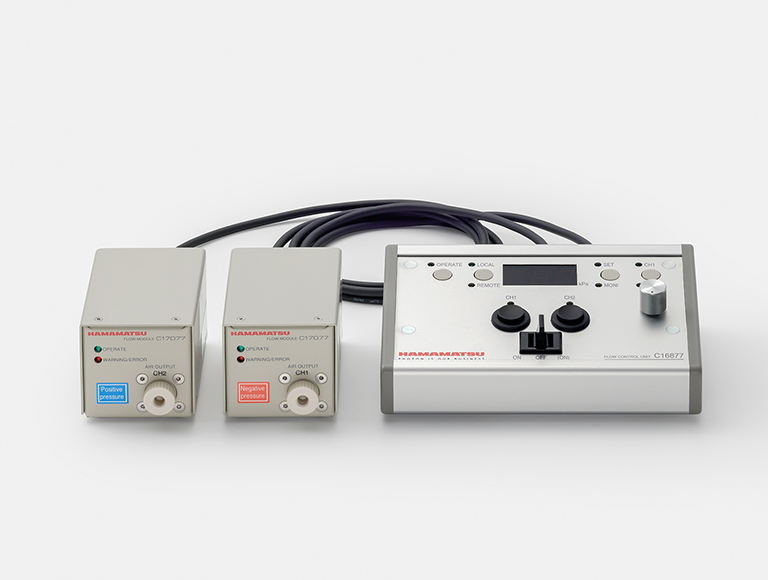
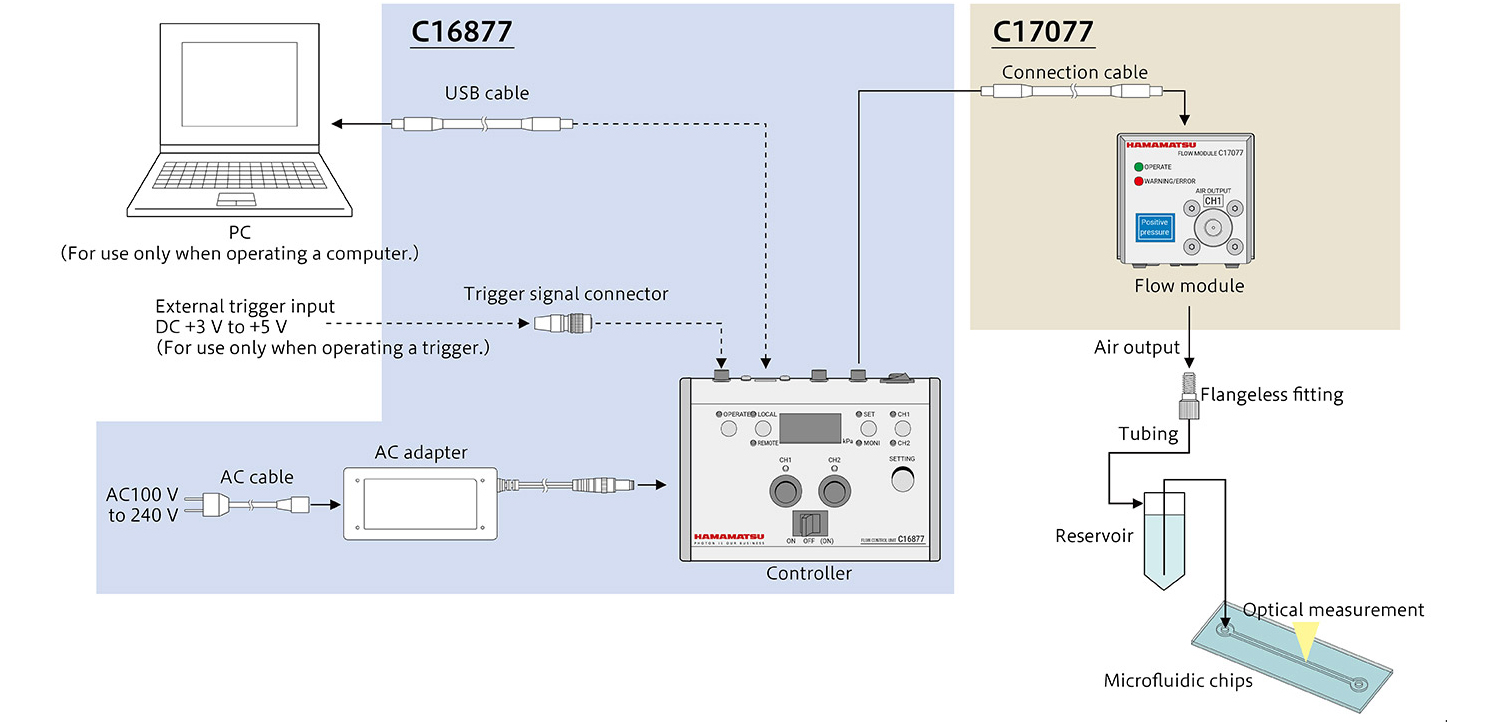
● Flow control unit C16877-01, C17077-01/02
A flow module and controller are developed capable of stable sample delivery for optical measurement applications utilizing microfluidic channels. Using microfluidic channels reduces the required sample volume, minimizing the burden on the human body. Furthermore, since testing can be performed with a minimal amount of blood, it also reduces waste such as syringes.
ㅤ
● EB-ENGINE ® Low energy electron beam source L16379
Water-based and solvent-based inks are commonly used for printing on food flexible packaging films. However, these inks require significant energy during the drying process. In addition, solvent-based inks cause problems such as air pollution and odor caused by volatile organic compounds (VOCs). As a solution to these issues, EB ink technology has been attracting increasing attention. The CE marked L16379 is a low-energy electron beam irradiation source that are compatible with EB inks and enable instantaneous ink curing. Compared with the previous model, the L12978, it delivers more than four times the output. As a result, it significantly reduces power consumption during the printing and drying processes and enables an environmentally friendly printing process with zero VOC emissions.
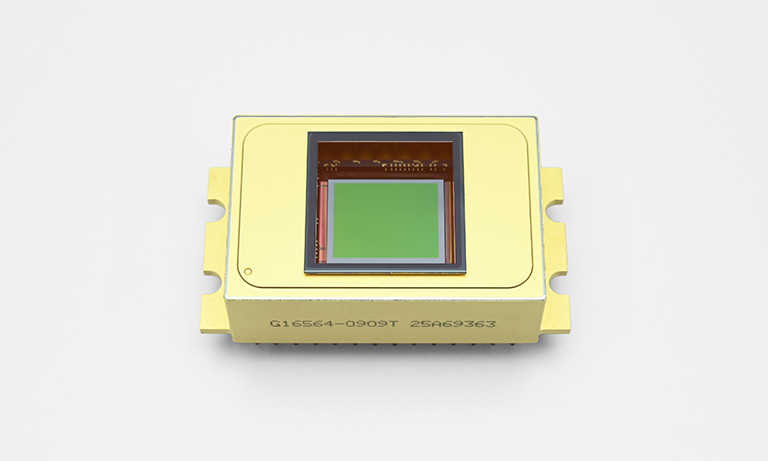
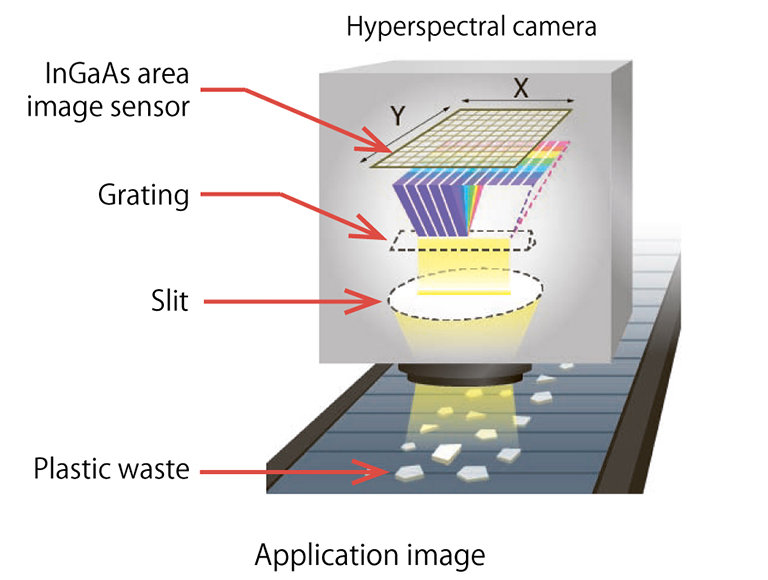
● InGaAs area image sensors G16561 to G16564-0909T
Plastic recycling utilizing InGaAs area image sensors is expected to contribute to the realization of a recycling-oriented society in addressing the challenge of plastic waste, one of the environmental issues. Sorting high-quality waste plastic requires high-precision (high-resolution) and high-speed analysis using a hyperspectral camera. This product features high resolution (640 x 512 pixels), wide wavelength detection range, high frame rate, and multi-line readout.
● Si photodiode S16495
Hydrogen combustion in pure water conditions produces essentially only water (H₂O) and emits no carbon dioxide (CO₂), making it an energy source attracting attention for its low environmental impact. However, hydrogen flames are difficult to visually confirm, so the Si photodiode S16495 was developed to detect one of its emission spectra at 310 nm. While sensitive to 310 nm, it suppresses sensitivity to infrared radiation, which is prone to cause noise*, making it expected to be effective for detecting hydrogen flames.
* Depending on environmental conditions, the device may still respond to infrared wavelengths.
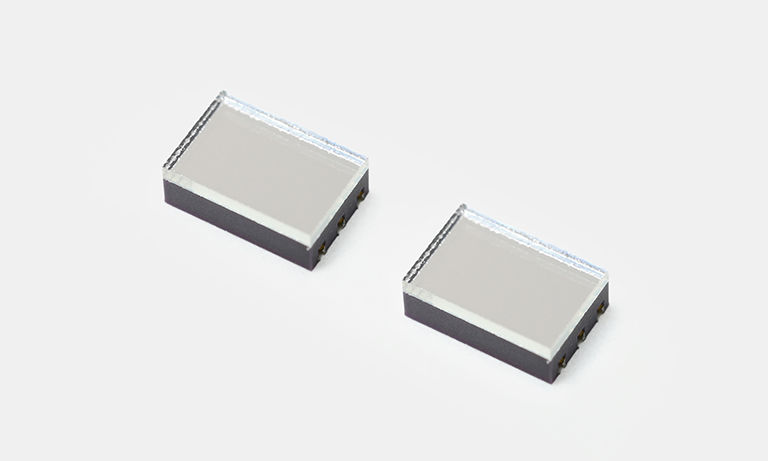
● LCOS-SLM (Optical phase modulator) X15223-03CL
X15223-03CL is LCOS-SLM designed for industrial equipment, featuring sapphire glass for superior light resistance compared to conventional products. It is particularly expected to be used in metal 3D printers, which have seen increasing momentum in recent years. By incorporating this product, it is possible to create hollow shapes and hollowed-out shapes that cannot be achieved by cutting. This contributes to the conservation of metal resources, reduction of cutting waste, and reduction of waste disposal.
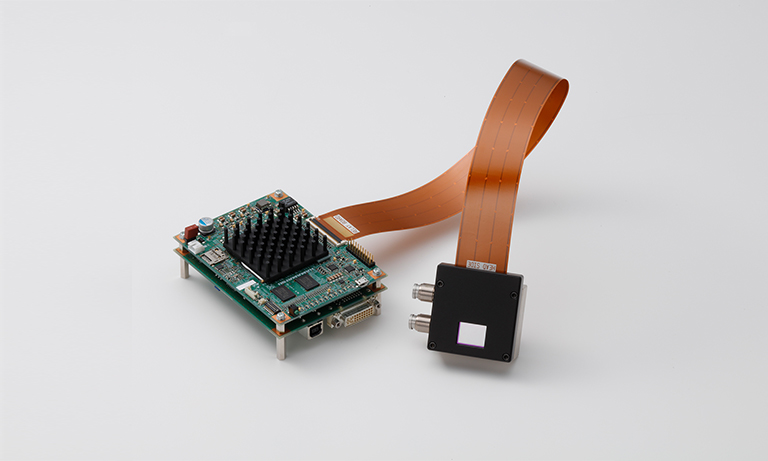
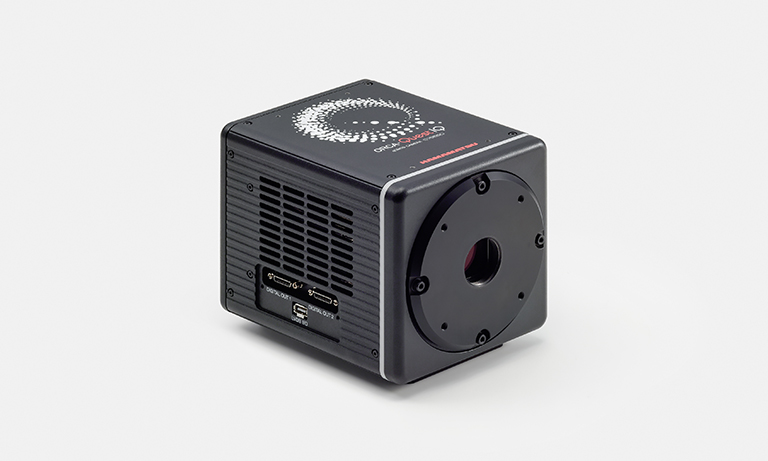
● ORCA®-Quest IQ qCMOS® camera C15550-23UP
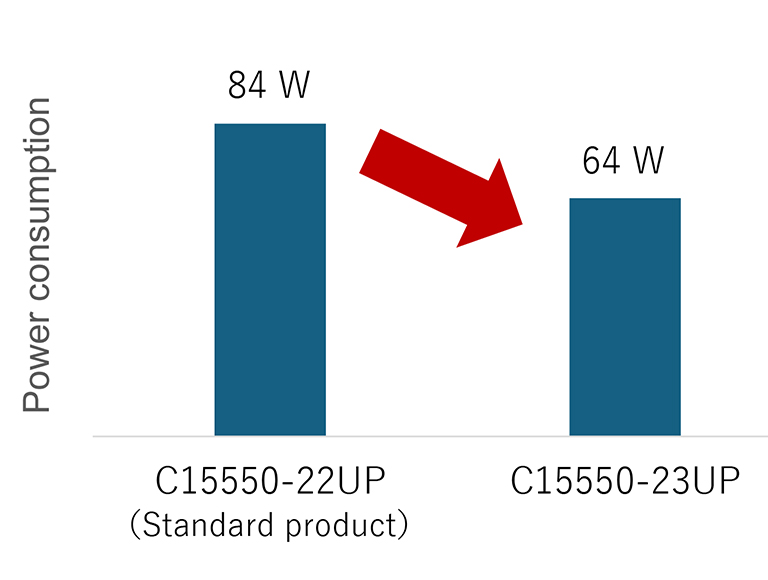
C15550-23UP is a camera that supports Camera Link output compared to the standard product C15550-22UP. By optimizing performance and functions based on the C15550-22UP, the power consumption has been reduced from 84W to 64W, resulting in a more environmentally friendly product.
● NanoZoomer ® S540 Digital slide scanner
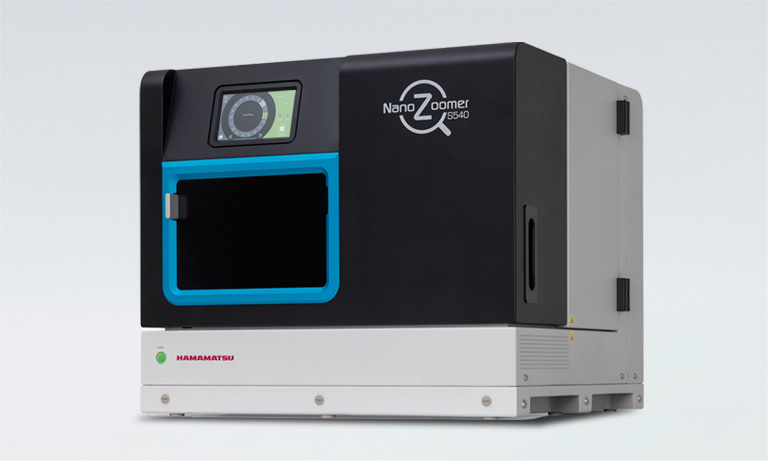
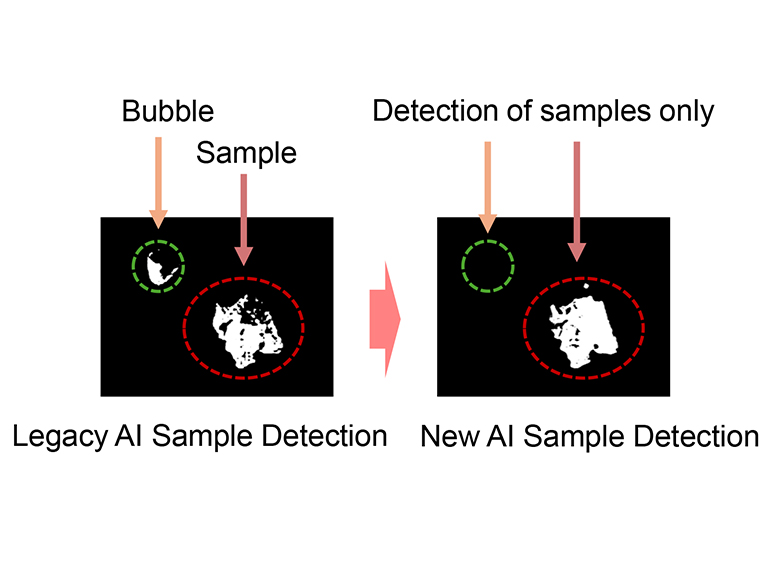
NanoZoomer S540 is equipped with an AI-based sample detection function, automating and streamlining the pathology image scanning process. The previous AI-based sample detection function has been improved to increase accuracy. This reduces the number of rescans, and reduces data storage capacity and power consumption. These technologies contribute to resource and energy conservation in medical settings, thereby reducing the environmental impact.
● Cooled CMOS camera C17448-01
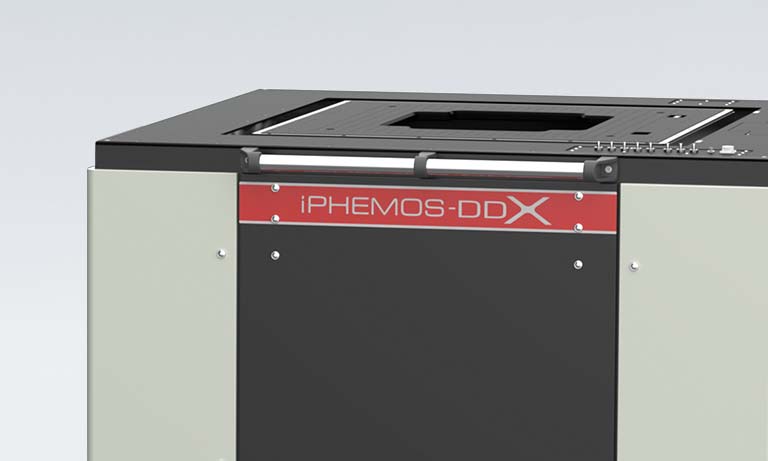
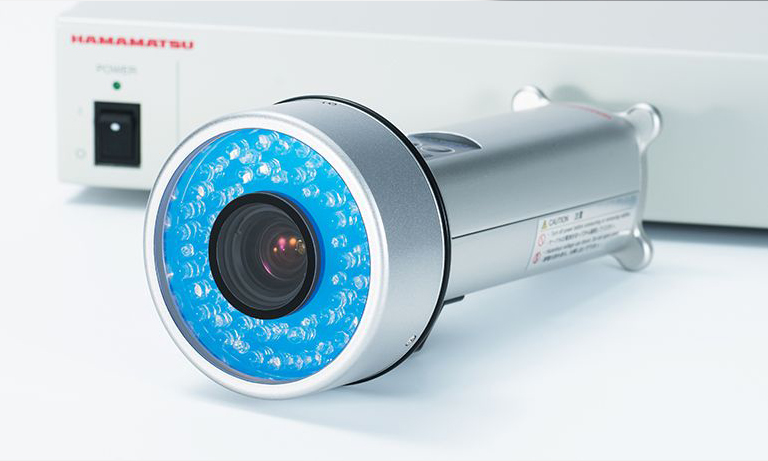
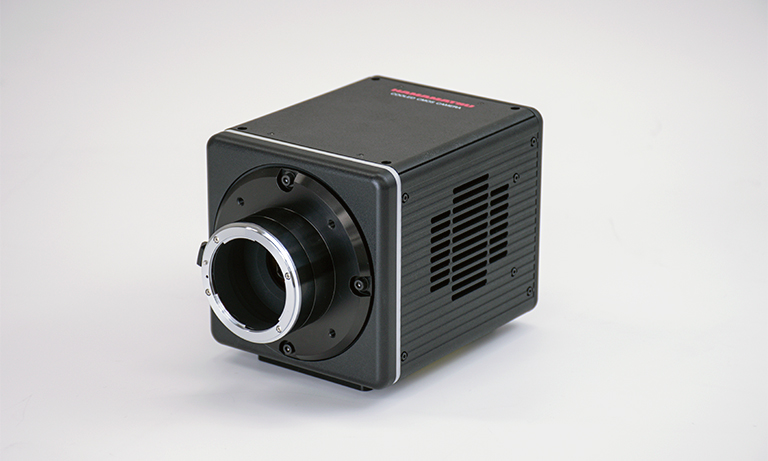
Most cameras for photo emission require the use of water circulation units to cool the camera. The cooled CMOS camera C17448-01 developed for PHEMOS-X emission microscopy achieve air-cooling system, eliminating the need for water-cooling systems, contributing to power savings and reduced CO2 emissions.
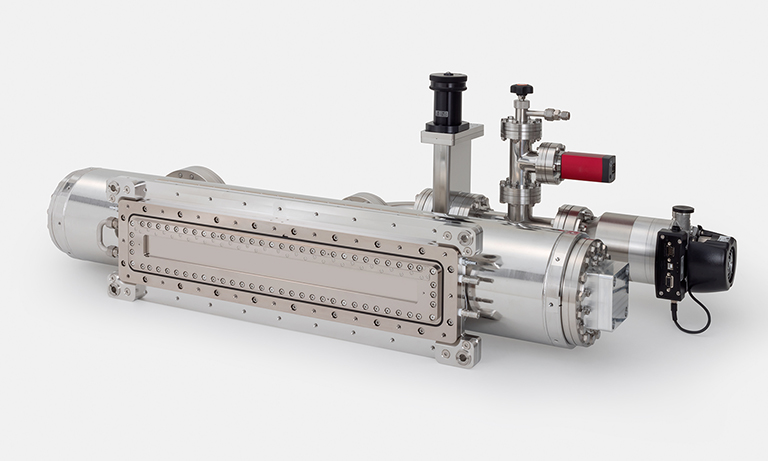
● Universal streak camera C16910 series
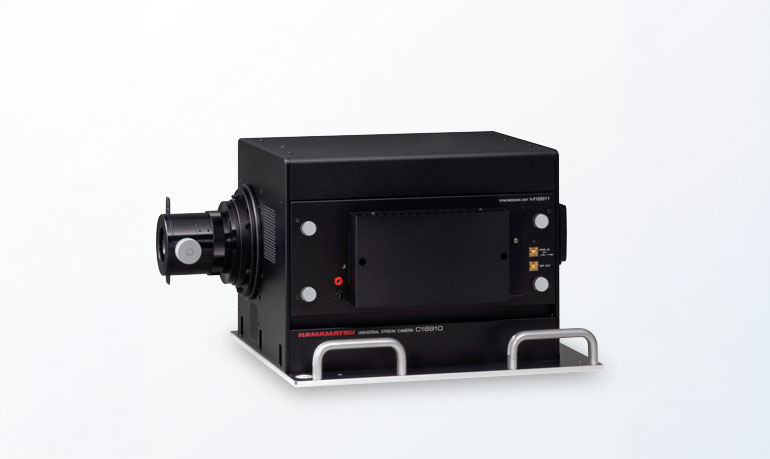
The universal streak camera is a system for observing ultra-high-speed photodynamics in the ultraviolet to near-infrared range. Previously, the high-voltage power supply and deflection coil components contained Dechlorane Plus, the chlorine-based flame retardant. Because Dechlorane Plus is persistent, highly bioaccumulative, and has long-term toxicity, its manufacture and use are generally prohibited from 2025 onwards under the Stockholm Convention and the Act on the Evaluation of Chemical Substances and Regulation of Their Manufacture, etc. (Chemical Substances Control Law). This product has been redesigned with components that do not contain Dechlorane Plus, successfully reducing environmental impact while maintaining high time resolution.
- Confirmation
-
It looks like you're in the . If this is not your location, please select the correct region or country below.
You're headed to Hamamatsu Photonics website for JP (English). If you want to view an other country's site, the optimized information will be provided by selecting options below.
In order to use this website comfortably, we use cookies. For cookie details please see our cookie policy.
- Cookie Policy
-
This website or its third-party tools use cookies, which are necessary to its functioning and required to achieve the purposes illustrated in this cookie policy. By closing the cookie warning banner, scrolling the page, clicking a link or continuing to browse otherwise, you agree to the use of cookies.
Hamamatsu uses cookies in order to enhance your experience on our website and ensure that our website functions.
You can visit this page at any time to learn more about cookies, get the most up to date information on how we use cookies and manage your cookie settings. We will not use cookies for any purpose other than the ones stated, but please note that we reserve the right to update our cookies.
1. What are cookies?
For modern websites to work according to visitor’s expectations, they need to collect certain basic information about visitors. To do this, a site will create small text files which are placed on visitor’s devices (computer or mobile) - these files are known as cookies when you access a website. Cookies are used in order to make websites function and work efficiently. Cookies are uniquely assigned to each visitor and can only be read by a web server in the domain that issued the cookie to the visitor. Cookies cannot be used to run programs or deliver viruses to a visitor’s device.
Cookies do various jobs which make the visitor’s experience of the internet much smoother and more interactive. For instance, cookies are used to remember the visitor’s preferences on sites they visit often, to remember language preference and to help navigate between pages more efficiently. Much, though not all, of the data collected is anonymous, though some of it is designed to detect browsing patterns and approximate geographical location to improve the visitor experience.
Certain type of cookies may require the data subject’s consent before storing them on the computer.
2. What are the different types of cookies?
This website uses two types of cookies:
- First party cookies. For our website, the first party cookies are controlled and maintained by Hamamatsu. No other parties have access to these cookies.
- Third party cookies. These cookies are implemented by organizations outside Hamamatsu. We do not have access to the data in these cookies, but we use these cookies to improve the overall website experience.
3. How do we use cookies?
This website uses cookies for following purposes:
- Certain cookies are necessary for our website to function. These are strictly necessary cookies and are required to enable website access, support navigation or provide relevant content. These cookies direct you to the correct region or country, and support security and ecommerce. Strictly necessary cookies also enforce your privacy preferences. Without these strictly necessary cookies, much of our website will not function.
- Analytics cookies are used to track website usage. This data enables us to improve our website usability, performance and website administration. In our analytics cookies, we do not store any personal identifying information.
- Functionality cookies. These are used to recognize you when you return to our website. This enables us to personalize our content for you, greet you by name and remember your preferences (for example, your choice of language or region).
- These cookies record your visit to our website, the pages you have visited and the links you have followed. We will use this information to make our website and the advertising displayed on it more relevant to your interests. We may also share this information with third parties for this purpose.
Cookies help us help you. Through the use of cookies, we learn what is important to our visitors and we develop and enhance website content and functionality to support your experience. Much of our website can be accessed if cookies are disabled, however certain website functions may not work. And, we believe your current and future visits will be enhanced if cookies are enabled.
4. Which cookies do we use?
There are two ways to manage cookie preferences.
- You can set your cookie preferences on your device or in your browser.
- You can set your cookie preferences at the website level.
If you don’t want to receive cookies, you can modify your browser so that it notifies you when cookies are sent to it or you can refuse cookies altogether. You can also delete cookies that have already been set.
If you wish to restrict or block web browser cookies which are set on your device then you can do this through your browser settings; the Help function within your browser should tell you how. Alternatively, you may wish to visit www.aboutcookies.org, which contains comprehensive information on how to do this on a wide variety of desktop browsers.
5. What are Internet tags and how do we use them with cookies?
Occasionally, we may use internet tags (also known as action tags, single-pixel GIFs, clear GIFs, invisible GIFs and 1-by-1 GIFs) at this site and may deploy these tags/cookies through a third-party advertising partner or a web analytical service partner which may be located and store the respective information (including your IP-address) in a foreign country. These tags/cookies are placed on both online advertisements that bring users to this site and on different pages of this site. We use this technology to measure the visitors' responses to our sites and the effectiveness of our advertising campaigns (including how many times a page is opened and which information is consulted) as well as to evaluate your use of this website. The third-party partner or the web analytical service partner may be able to collect data about visitors to our and other sites because of these internet tags/cookies, may compose reports regarding the website’s activity for us and may provide further services which are related to the use of the website and the internet. They may provide such information to other parties if there is a legal requirement that they do so, or if they hire the other parties to process information on their behalf.
If you would like more information about web tags and cookies associated with on-line advertising or to opt-out of third-party collection of this information, please visit the Network Advertising Initiative website http://www.networkadvertising.org.
6. Analytics and Advertisement Cookies
We use third-party cookies (such as Google Analytics) to track visitors on our website, to get reports about how visitors use the website and to inform, optimize and serve ads based on someone's past visits to our website.
You may opt-out of Google Analytics cookies by the websites provided by Google:
https://tools.google.com/dlpage/gaoptout?hl=en
As provided in this Privacy Policy (Article 5), you can learn more about opt-out cookies by the website provided by Network Advertising Initiative:
http://www.networkadvertising.org
We inform you that in such case you will not be able to wholly use all functions of our website.
Close