
Products










We are actively taking measures to improve product quality levels.
Applications














Why Hamamatsu?
Resources





Support




Our company







Investors








United Kingdom (EN)
Select your region or country.


Faster pharmaceutical process monitoring with FT-NIR spectroscopy
Traditional offline quality testing can delay the detection of process and quality deviations until considerable time and materials have already been invested. Process Analytical Technology (PAT) addresses this challenge through real-time process monitoring, with Fourier transform near-infrared (FT-NIR) spectroscopy playing an increasingly important role. This article examines the technology, its key pharmaceutical applications, and how Hamamatsu Photonics’ latest FT-NIR spectrometer supports the development of reliable PAT solutions.
Pharmaceutical manufacturing requires tight control of every part of the process – including blending powders, granulating intermediates and applying tablet coatings – as even small variations can affect product quality, consistency, and yield. However, in many cases, quality is still confirmed through offline laboratory testing. This often means that, by the time a deviation is detected, considerable manufacturing effort and materials may already have been invested in the batch, potentially resulting in rework, investigations, scrap or delays to product release. Recognizing the need for greater process understanding and more science-based manufacturing, the U.S. Food and Drug Administration (FDA) introduced its PAT initiative.
PAT encourages manufacturers to build quality into manufacturing through better process understanding and real-time monitoring. In practice, it requires the real-time measurement of critical process parameters (CPPs) and critical quality attributes (CQAs) to improve process understanding and control. Achieving this relies on analytical technologies that are fast, robust, and capable of integrating with automated control systems to operate directly alongside the manufacturing process. Among these, near-infrared (NIR) spectroscopy has become one of the most widely adopted techniques, reflected by the FDA's publication of dedicated guidance covering the development, validation, and implementation of NIR analytical procedures for pharmaceutical manufacturing. [1-4]
FT-NIR spectroscopy
FT-NIR spectroscopy is commonly used in pharmaceutical PAT. It operates in the short-wave infrared (SWIR) portion of the NIR spectrum (approximately 1,000-2,500 nm), where many organic molecules exhibit characteristic absorption overtones and combination-band absorptions that are highly informative for quantitative chemical analysis.
FT-NIR spectroscopy uses an interferometer to collect information from numerous wavelengths simultaneously, which is then converted into a conventional spectrum by a Fourier transform. In contrast to instruments that measure individual wavelengths sequentially, FT-NIR spectroscopy captures information from the entire spectral range in a single measurement, retaining the rich spectral information required for quantitative analysis. [5] The spectra can then be combined with chemometric models to track CQAs.
Depending on the application, measurements can be performed in diffuse reflection or transmission modes, allowing both powders and liquids to be analyzed. This flexibility has made FT-NIR spectroscopy one of the most widely used spectroscopic techniques for pharmaceutical PAT. It is commonly applied to moisture monitoring, blend and content uniformity, and material identification and verification, as well as being used for reaction monitoring, API and excipient concentration measurements, process endpoint determination, tablet coating, crystallization, and solvent analysis. [6-8]
Moisture content analysis
Moisture monitoring is one of the most common applications of FT-NIR spectroscopy, as it influences powder flow, granulation behavior, tablet compression, coating performance, and long-term product stability. Frequent spectroscopic measurements provide earlier visibility into changing moisture levels during drying, granulation, and coating than intermittent laboratory sampling.
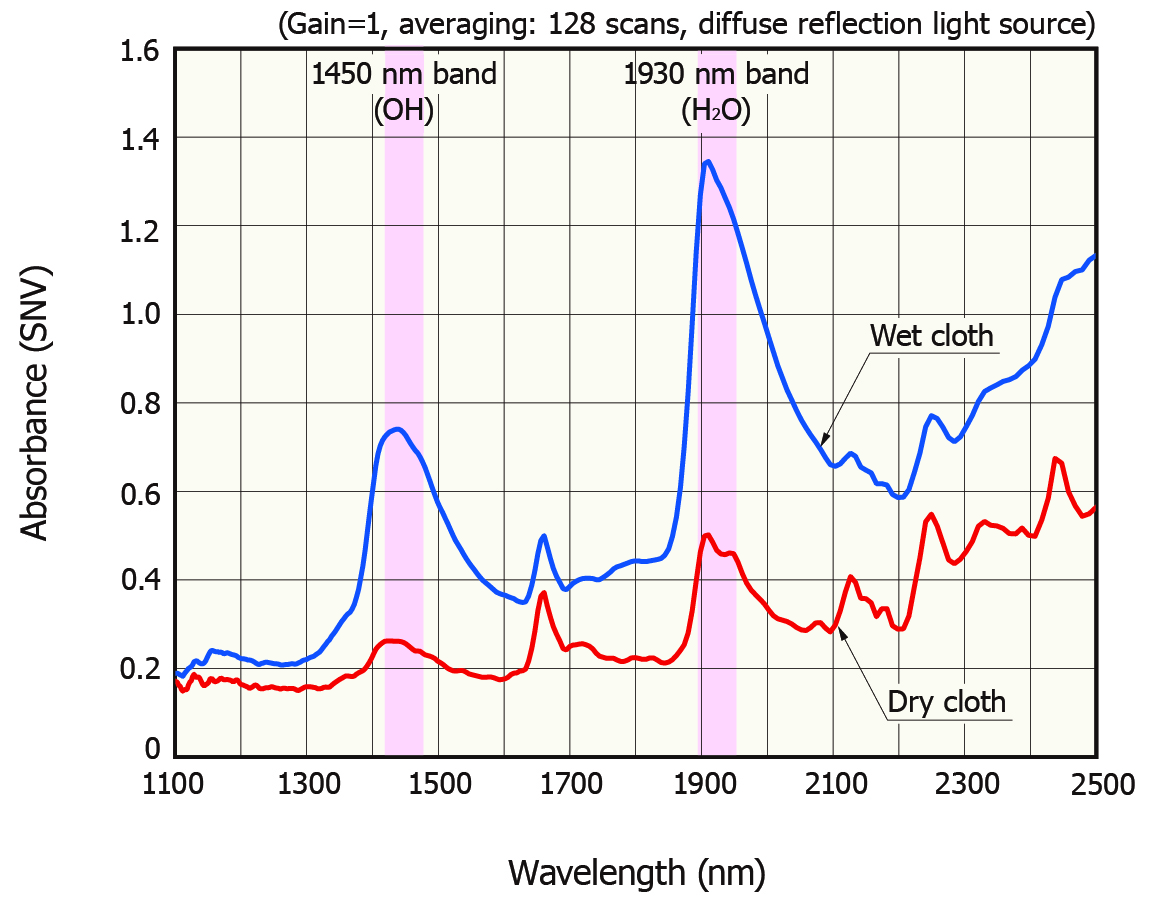
Figure 1: Absorption spectra of a dry and a wet cloth obtained using a Hamamatsu Photonics FT-NIR spectrometer. The wet cloth has a higher absorption in the 1,450 nm and 1,930 nm water absorption bands.
Blend and content uniformity
Pharmaceutical formulations contain multiple ingredients that must be distributed consistently throughout the product. Each compound produces a characteristic NIR spectral fingerprint, and FT-NIR spectroscopy can be combined with chemometric models to assess blend homogeneity and ingredient distribution throughout the manufacturing process. This provides a more representative assessment than can be achieved using a limited number of discrete samples. [9]
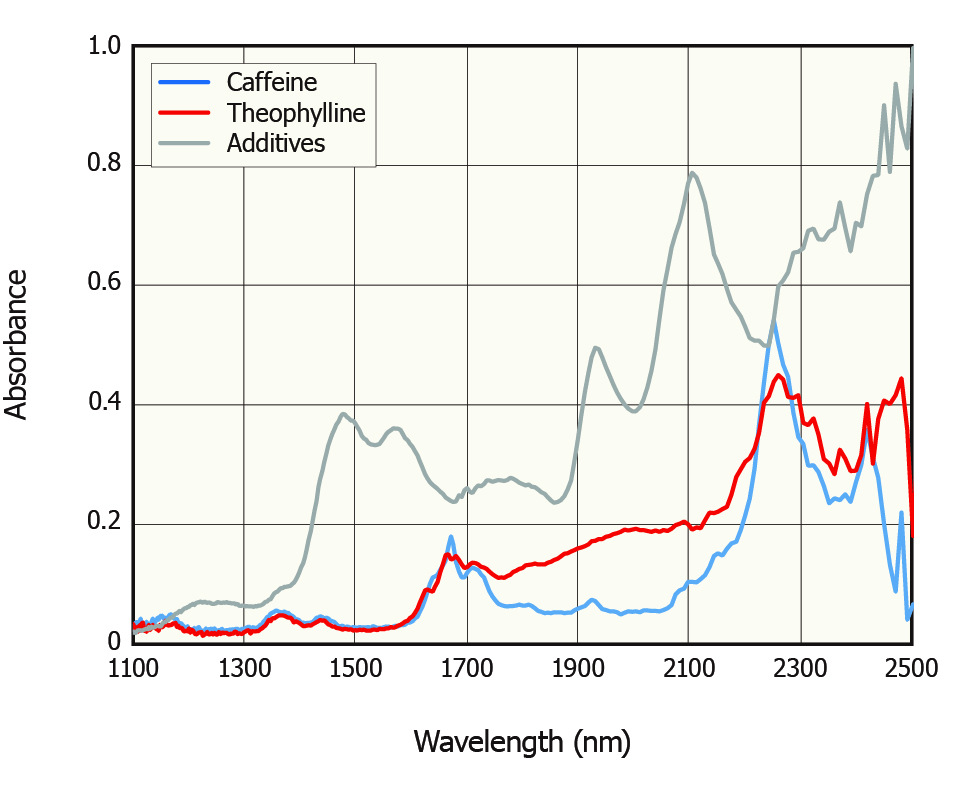
Figure 2: Absorption spectra of tablets containing theophylline, caffeine, and additives obtained using a Hamamatsu Photonics FT-NIR spectrometer.
Material identification and verification
Another important application of FT-NIR spectroscopy is material identification and verification, including for incoming raw material inspection and screening for counterfeit or substituted products. Distinct spectral fingerprints allow ingredients to be identified rapidly before they enter production, helping to reduce the risk of mix-ups. Depending on the packaging material and measurement configuration, inspection may even be possible without opening the package. [10]
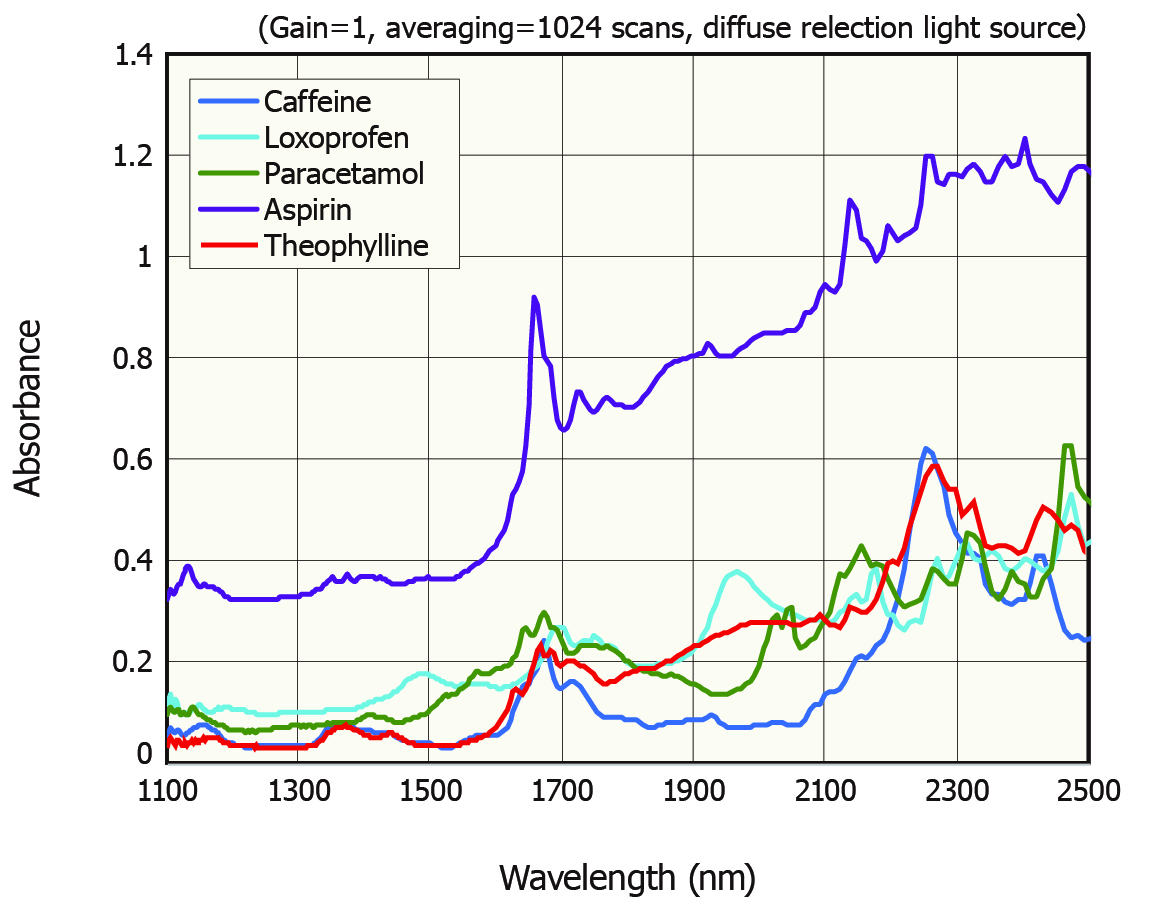
Figure 3: Spectra of five medicines obtained using a Hamamatsu Photonics FT-NIR spectrometer.
Together, these applications show how inline FT-NIR spectroscopy shifts quality assurance from periodic testing to a continuous process. Repeated inline measurements provide a more representative picture of the manufacturing process than isolated laboratory testing, enabling earlier detection of deviations and more automated process control. However, successful implementation relies on continuous maintenance and calibration of the instrument, and use of appropriate chemometric models.
Meeting the needs of pharmaceutical equipment manufacturers
Delivering consistent and reliable FT-NIR spectroscopy measurements in a manufacturing environment is highly dependent on the design of the instrument. Factors such as signal-to-noise ratio, accuracy, throughput, robustness, long-term stability, compactness, cost-effectiveness and ability to integrate with existing hardware and control systems are all crucial to effective inline testing. Compact instrumentation is particularly valuable where space is limited, or where spectroscopy needs to be incorporated into existing production equipment rather than installed as a standalone instrument.
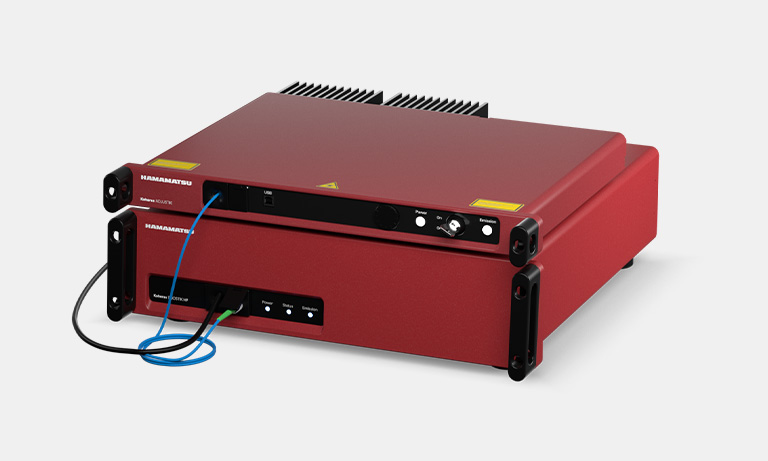
Reducing the engineering effort required to integrate FT-NIR spectrometry into production environments is an important consideration for OEMs developing complete PAT solutions for pharmaceutical manufacturing. Hamamatsu Photonics’ FT-NIR spectrometers are already established in a range of industrial and analytical applications, and the latest generation instrument builds on this proven platform by combining the inherent advantages of Fourier transform spectroscopy with the higher acquisition speeds required for real-time pharmaceutical PAT. Designed as an integration-ready spectroscopy platform, it provides standard communication interfaces that allow OEMs to incorporate it directly into their own analyzer platforms and automated control systems without developing dedicated instrument electronics. Measurement configurations can also be tailored to individual applications using fiber-optic probes and application-specific optical designs, giving equipment manufacturers the flexibility to optimize sampling geometry for different processes.
The spectrometer also draws on Hamamatsu Photonics’ long-standing expertise in indium gallium arsenide (InGaAs) detector technology, delivering the sensitivity and long-term stability required for reliable operation in continuous manufacturing environments. Together, these capabilities provide OEMs with a compact, cost-effective, high-performance spectroscopy platform that can be easily integrated into complete PAT systems, supporting the development of robust, real-time process monitoring solutions.
Hamamatsu Photonics offers a portfolio of NIR/SWIR technologies designed for OEM developers alongside its FT-NIR spectrometer. These include SWIR mini-spectrometers for extremely high-speed measurements with adjustable integration times, and MEMS Fabry-Pérot interferometer (MEMS-FPI) modules with an integrated light source. This broad product range allows OEMs to select the most appropriate analytical technologies for their measurement requirements.
References
[1] FDA, “Guidance for Industry PAT — A Framework for Innovative Pharmaceutical Development, Manufacturing, and Quality Assurance”. Accessed Jul. 7, 2026. Available: https://www.fda.gov/media/71012/download
[2] E. J. Kim et al., “Process Analytical Technology Tools for Monitoring Pharmaceutical Unit Operations: A Control Strategy for Continuous Process Verification”, Pharmaceutics, vol. 13, no. 6, pp. 919, 2021.
[3] FDA, “Development and Submission of Near Infrared Analytical Procedures”. Accessed Jul. 7, 2026. Available: https://www.fda.gov/regulatory-information/search-fda-guidance-documents/development-and-submission-near-infrared-analytical-procedures
[4] M. Morton, “A Quality-by-Design (QbD) Approach to Quantitative Near-Infrared Continuous Pharmaceutical Manufacturing”, American Pharmaceutical Review. Accessed Jul. 7, 2026. Available: https://www.americanpharmaceuticalreview.com/featured-articles/36924-a-quality-by-design-qbd-approach-to-quantitative-near-infrared-continuous-pharmaceutical-manufacturing/
[5] T. Suzuki et al., “Compact FT-NIR spectrometer made through MOEMS technology for industrial applications”, International Conference on Electronics Packaging and Hybrid Bonding Symposium (ICEP-HBS), pp. 11-12, 2026.
[6] H. Bao and L. Rodriguez-Saona, “Multi-component beer quality control using miniaturized Fourier transform near-infrared systems”, Microchemical Journal, vol. 221, pp. 116996, 2026.
[7] T. Kisling et al., "Real-Time Monitoring of a Sol–Gel Reaction for Polysilane Production Using Inline NIR Spectroscopy", Langmuir, vol. 39, no. 23, pp. 8153-8162, 2023.
[8] S. Nakashima et al., "Kinetics of Chlorophyll Degradation in Japanese Maple (Acer palmatum) Leaves with In Situ Heating Visible and Near-Infrared Spectroscopic Monitoring", Life, vol. 15, no. 3, pp. 335, 2025.
[9] B. Bakri, “Assessment of powder blend uniformity: Comparison of real-time NIR blend monitoring with stratified sampling in combination with HPLC and at-line NIR Chemical Imaging”, European Journal of Pharmaceutics and Biopharmaceutics, vol. 97, pp. 78, 2015.
[10] Spectroscopy, “NIR Chemical Imaging for Counterfeit Pharmaceutical Products Analysis”, vol. 22, no. 2, 2007.
- Confirmation
-
It looks like you're in the . If this is not your location, please select the correct region or country below.
You're headed to Hamamatsu Photonics website for GB (English). If you want to view an other country's site, the optimized information will be provided by selecting options below.
In order to use this website comfortably, we use cookies. For cookie details please see our cookie policy.
- Cookie Policy
-
This website or its third-party tools use cookies, which are necessary to its functioning and required to achieve the purposes illustrated in this cookie policy. By closing the cookie warning banner, scrolling the page, clicking a link or continuing to browse otherwise, you agree to the use of cookies.
Hamamatsu uses cookies in order to enhance your experience on our website and ensure that our website functions.
You can visit this page at any time to learn more about cookies, get the most up to date information on how we use cookies and manage your cookie settings. We will not use cookies for any purpose other than the ones stated, but please note that we reserve the right to update our cookies.
1. What are cookies?
For modern websites to work according to visitor’s expectations, they need to collect certain basic information about visitors. To do this, a site will create small text files which are placed on visitor’s devices (computer or mobile) - these files are known as cookies when you access a website. Cookies are used in order to make websites function and work efficiently. Cookies are uniquely assigned to each visitor and can only be read by a web server in the domain that issued the cookie to the visitor. Cookies cannot be used to run programs or deliver viruses to a visitor’s device.
Cookies do various jobs which make the visitor’s experience of the internet much smoother and more interactive. For instance, cookies are used to remember the visitor’s preferences on sites they visit often, to remember language preference and to help navigate between pages more efficiently. Much, though not all, of the data collected is anonymous, though some of it is designed to detect browsing patterns and approximate geographical location to improve the visitor experience.
Certain type of cookies may require the data subject’s consent before storing them on the computer.
2. What are the different types of cookies?
This website uses two types of cookies:
- First party cookies. For our website, the first party cookies are controlled and maintained by Hamamatsu. No other parties have access to these cookies.
- Third party cookies. These cookies are implemented by organizations outside Hamamatsu. We do not have access to the data in these cookies, but we use these cookies to improve the overall website experience.
3. How do we use cookies?
This website uses cookies for following purposes:
- Certain cookies are necessary for our website to function. These are strictly necessary cookies and are required to enable website access, support navigation or provide relevant content. These cookies direct you to the correct region or country, and support security and ecommerce. Strictly necessary cookies also enforce your privacy preferences. Without these strictly necessary cookies, much of our website will not function.
- Analytics cookies are used to track website usage. This data enables us to improve our website usability, performance and website administration. In our analytics cookies, we do not store any personal identifying information.
- Functionality cookies. These are used to recognize you when you return to our website. This enables us to personalize our content for you, greet you by name and remember your preferences (for example, your choice of language or region).
- These cookies record your visit to our website, the pages you have visited and the links you have followed. We will use this information to make our website and the advertising displayed on it more relevant to your interests. We may also share this information with third parties for this purpose.
Cookies help us help you. Through the use of cookies, we learn what is important to our visitors and we develop and enhance website content and functionality to support your experience. Much of our website can be accessed if cookies are disabled, however certain website functions may not work. And, we believe your current and future visits will be enhanced if cookies are enabled.
4. Which cookies do we use?
There are two ways to manage cookie preferences.
- You can set your cookie preferences on your device or in your browser.
- You can set your cookie preferences at the website level.
If you don’t want to receive cookies, you can modify your browser so that it notifies you when cookies are sent to it or you can refuse cookies altogether. You can also delete cookies that have already been set.
If you wish to restrict or block web browser cookies which are set on your device then you can do this through your browser settings; the Help function within your browser should tell you how. Alternatively, you may wish to visit www.aboutcookies.org, which contains comprehensive information on how to do this on a wide variety of desktop browsers.
5. What are Internet tags and how do we use them with cookies?
Occasionally, we may use internet tags (also known as action tags, single-pixel GIFs, clear GIFs, invisible GIFs and 1-by-1 GIFs) at this site and may deploy these tags/cookies through a third-party advertising partner or a web analytical service partner which may be located and store the respective information (including your IP-address) in a foreign country. These tags/cookies are placed on both online advertisements that bring users to this site and on different pages of this site. We use this technology to measure the visitors' responses to our sites and the effectiveness of our advertising campaigns (including how many times a page is opened and which information is consulted) as well as to evaluate your use of this website. The third-party partner or the web analytical service partner may be able to collect data about visitors to our and other sites because of these internet tags/cookies, may compose reports regarding the website’s activity for us and may provide further services which are related to the use of the website and the internet. They may provide such information to other parties if there is a legal requirement that they do so, or if they hire the other parties to process information on their behalf.
If you would like more information about web tags and cookies associated with on-line advertising or to opt-out of third-party collection of this information, please visit the Network Advertising Initiative website http://www.networkadvertising.org.
6. Analytics and Advertisement Cookies
We use third-party cookies (such as Google Analytics) to track visitors on our website, to get reports about how visitors use the website and to inform, optimize and serve ads based on someone's past visits to our website.
You may opt-out of Google Analytics cookies by the websites provided by Google:
https://tools.google.com/dlpage/gaoptout?hl=en
As provided in this Privacy Policy (Article 5), you can learn more about opt-out cookies by the website provided by Network Advertising Initiative:
http://www.networkadvertising.org
We inform you that in such case you will not be able to wholly use all functions of our website.
Close