
Products










We are actively taking measures to improve product quality levels.
Applications













Why Hamamatsu?
Resources





Support




Our company







Investors








United Kingdom (EN)
Select your region or country.

How compact pulse laser diodes are advancing industrial LiDAR
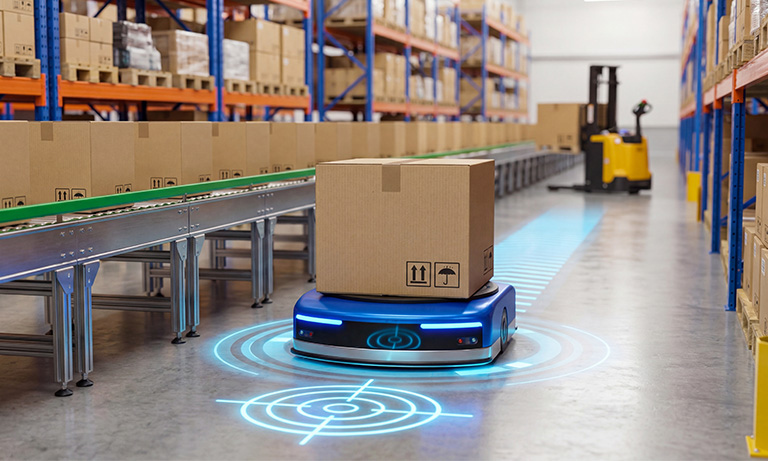
Autonomous robots, automated guided vehicles (AGVs), and machine-vision systems are becoming central to industrial automation, but they must operate safely in environments shaped by dust, vibration, changing light conditions, and moving obstacles.
Light Detection and Ranging (LiDAR) is helping these systems build reliable spatial awareness for navigation, obstacle detection, and 3D mapping. As industrial LiDAR becomes more widely adopted, the photonic components behind it must deliver high performance in increasingly compact, efficient, and scalable formats. This is where compact pulse laser diodes are playing an important role.
Industrial LiDAR must do more than perform well
Industrial environments place demanding requirements on sensing technologies. LiDAR systems used in factories and warehouses must operate reliably despite dust, vibration, humidity, temperature fluctuations, ambient light, and repeated mechanical shocks. Failure to detect a person, pallet, or piece of equipment can result in damaged goods, production downtime, or injury, making long-term sensing reliability a critical design requirement.
From application need to photonic design
Delivering reliable LiDAR performance ultimately depends on the photonic components at the heart of the system. Pulse laser diodes (PLDs) generate the short, high-power optical pulses required for time-of-flight measurements, while avalanche photodiodes (APDs) and silicon photomultipliers (SiPMs) detect the reflected light with high sensitivity. Together, these components determine key performance parameters including sensing range, accuracy, response time, and reliability.
Why compactness is becoming a performance requirement
As LiDAR adoption grows, performance remains essential, but it is no longer the only design requirement. System developers also need compact modules, lower power consumption, easier integration, and scalable manufacturing.
Smaller LiDAR modules can be integrated into more robots, mobile platforms, access systems, and industrial equipment. They also give engineers more flexibility where space, weight, and energy use are constrained.
Miniaturization also creates a technical challenge. Edge-emitting laser diodes are preferred for many high-power applications, but their conventional form factor can make low-profile surface-mount packages difficult to realize. The challenge is to combine high optical performance with a format that supports compact integration and volume production.
Low-profile PLDs: compact design without compromising output
Hamamatsu Photonics has developed a low-profile PLD design in an SMD package to address this challenge. The design uses an edge-emitting laser with a wedge mirror positioned next to the laser window, enabling a compact package while maintaining high peak power and energy efficiency.
The design is compatible with wafer-level manufacturing, supporting large-volume production. In post-processing, the devices are resin-embedded to improve durability and support long operating lifetimes. These characteristics are relevant for industrial LiDAR, where components must withstand demanding conditions and fit into practical system designs.
By bringing high-power PLD performance into a low-profile SMD format, compact LiDAR designs can become easier to implement without sacrificing output performance, efficiency, or reliability.
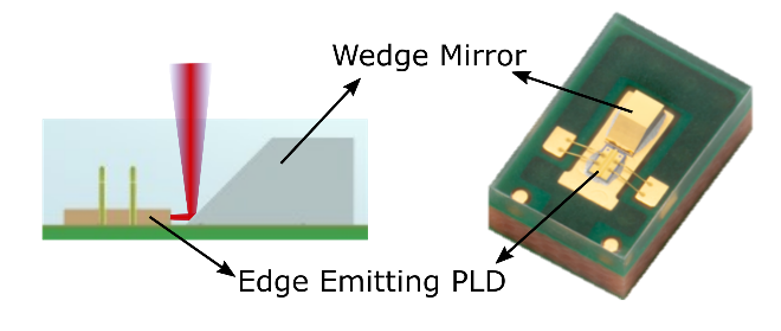
PLD in SMD package
From component innovation to industrial impact
Compact PLDs can influence more than the LiDAR module. Smaller, efficient, and scalable light sources allow more flexible sensor placement, more compact machine designs, and greater freedom for developers working with robots, automated guided vehicles, smart access systems, and inspection equipment.
The same approach can be extended to PLD arrays with grouped or independent control. This supports more customizable LiDAR architectures for different fields of view, sensing ranges, scanning strategies, and application requirements.
This flexibility matters because a warehouse robot, a safety sensor, and a machine-vision system may all use LiDAR, but each has different requirements for range, resolution, speed, robustness, and integration. Customizable photonic components help manufacturers design LiDAR systems around the application.
Smarter, smaller, more autonomous systems
As industrial automation becomes increasingly autonomous, LiDAR will continue to play a central role in enabling safe and reliable machine perception. Advances in photonic component design—particularly compact, high-performance pulse laser diodes—allow LiDAR systems to become smaller, more energy-efficient, and easier to integrate without compromising sensing performance. By combining innovative PLDs, high-sensitivity detectors, and scalable manufacturing, Hamamatsu Photonics supports the development of the next generation of industrial LiDAR systems.
If you would like to discuss your LiDAR project requirements and customization options with Hamamatsu Photonics experts, contact us today.
Explore our PLDs, Si APDs and SiPMs
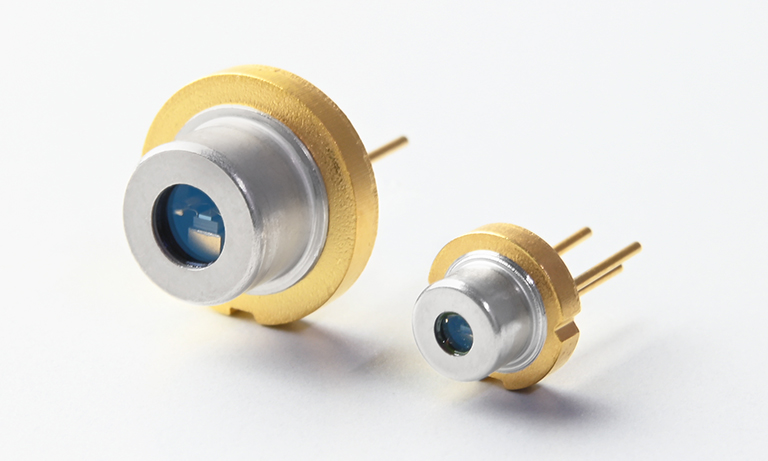
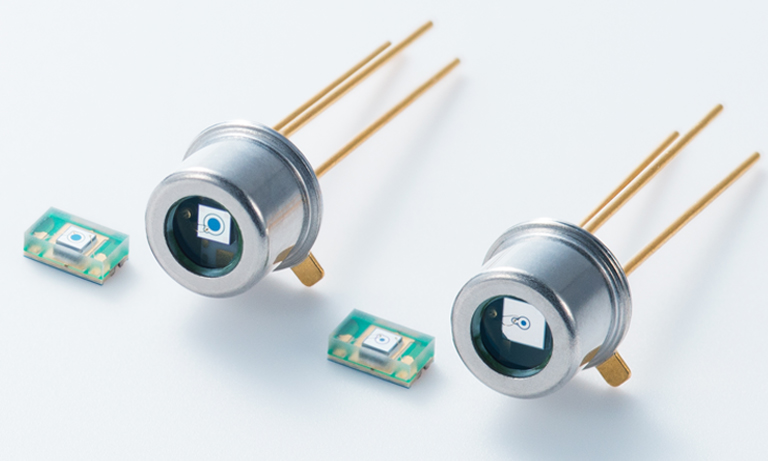
Pulsed laser diodes (PLD)
Laser diodes featuring high peak power under pulsed operation. Various peak output power and emission widths available.
Si APDs
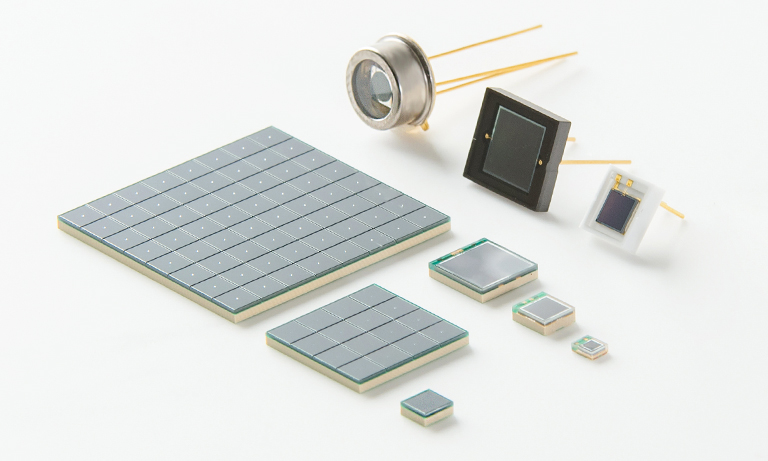
Silicon APDs provide high sensitivity ranging from UV to NIR for low light detection at high speeds.
- Confirmation
-
It looks like you're in the . If this is not your location, please select the correct region or country below.
You're headed to Hamamatsu Photonics website for GB (English). If you want to view an other country's site, the optimized information will be provided by selecting options below.
In order to use this website comfortably, we use cookies. For cookie details please see our cookie policy.
- Cookie Policy
-
This website or its third-party tools use cookies, which are necessary to its functioning and required to achieve the purposes illustrated in this cookie policy. By closing the cookie warning banner, scrolling the page, clicking a link or continuing to browse otherwise, you agree to the use of cookies.
Hamamatsu uses cookies in order to enhance your experience on our website and ensure that our website functions.
You can visit this page at any time to learn more about cookies, get the most up to date information on how we use cookies and manage your cookie settings. We will not use cookies for any purpose other than the ones stated, but please note that we reserve the right to update our cookies.
1. What are cookies?
For modern websites to work according to visitor’s expectations, they need to collect certain basic information about visitors. To do this, a site will create small text files which are placed on visitor’s devices (computer or mobile) - these files are known as cookies when you access a website. Cookies are used in order to make websites function and work efficiently. Cookies are uniquely assigned to each visitor and can only be read by a web server in the domain that issued the cookie to the visitor. Cookies cannot be used to run programs or deliver viruses to a visitor’s device.
Cookies do various jobs which make the visitor’s experience of the internet much smoother and more interactive. For instance, cookies are used to remember the visitor’s preferences on sites they visit often, to remember language preference and to help navigate between pages more efficiently. Much, though not all, of the data collected is anonymous, though some of it is designed to detect browsing patterns and approximate geographical location to improve the visitor experience.
Certain type of cookies may require the data subject’s consent before storing them on the computer.
2. What are the different types of cookies?
This website uses two types of cookies:
- First party cookies. For our website, the first party cookies are controlled and maintained by Hamamatsu. No other parties have access to these cookies.
- Third party cookies. These cookies are implemented by organizations outside Hamamatsu. We do not have access to the data in these cookies, but we use these cookies to improve the overall website experience.
3. How do we use cookies?
This website uses cookies for following purposes:
- Certain cookies are necessary for our website to function. These are strictly necessary cookies and are required to enable website access, support navigation or provide relevant content. These cookies direct you to the correct region or country, and support security and ecommerce. Strictly necessary cookies also enforce your privacy preferences. Without these strictly necessary cookies, much of our website will not function.
- Analytics cookies are used to track website usage. This data enables us to improve our website usability, performance and website administration. In our analytics cookies, we do not store any personal identifying information.
- Functionality cookies. These are used to recognize you when you return to our website. This enables us to personalize our content for you, greet you by name and remember your preferences (for example, your choice of language or region).
- These cookies record your visit to our website, the pages you have visited and the links you have followed. We will use this information to make our website and the advertising displayed on it more relevant to your interests. We may also share this information with third parties for this purpose.
Cookies help us help you. Through the use of cookies, we learn what is important to our visitors and we develop and enhance website content and functionality to support your experience. Much of our website can be accessed if cookies are disabled, however certain website functions may not work. And, we believe your current and future visits will be enhanced if cookies are enabled.
4. Which cookies do we use?
There are two ways to manage cookie preferences.
- You can set your cookie preferences on your device or in your browser.
- You can set your cookie preferences at the website level.
If you don’t want to receive cookies, you can modify your browser so that it notifies you when cookies are sent to it or you can refuse cookies altogether. You can also delete cookies that have already been set.
If you wish to restrict or block web browser cookies which are set on your device then you can do this through your browser settings; the Help function within your browser should tell you how. Alternatively, you may wish to visit www.aboutcookies.org, which contains comprehensive information on how to do this on a wide variety of desktop browsers.
5. What are Internet tags and how do we use them with cookies?
Occasionally, we may use internet tags (also known as action tags, single-pixel GIFs, clear GIFs, invisible GIFs and 1-by-1 GIFs) at this site and may deploy these tags/cookies through a third-party advertising partner or a web analytical service partner which may be located and store the respective information (including your IP-address) in a foreign country. These tags/cookies are placed on both online advertisements that bring users to this site and on different pages of this site. We use this technology to measure the visitors' responses to our sites and the effectiveness of our advertising campaigns (including how many times a page is opened and which information is consulted) as well as to evaluate your use of this website. The third-party partner or the web analytical service partner may be able to collect data about visitors to our and other sites because of these internet tags/cookies, may compose reports regarding the website’s activity for us and may provide further services which are related to the use of the website and the internet. They may provide such information to other parties if there is a legal requirement that they do so, or if they hire the other parties to process information on their behalf.
If you would like more information about web tags and cookies associated with on-line advertising or to opt-out of third-party collection of this information, please visit the Network Advertising Initiative website http://www.networkadvertising.org.
6. Analytics and Advertisement Cookies
We use third-party cookies (such as Google Analytics) to track visitors on our website, to get reports about how visitors use the website and to inform, optimize and serve ads based on someone's past visits to our website.
You may opt-out of Google Analytics cookies by the websites provided by Google:
https://tools.google.com/dlpage/gaoptout?hl=en
As provided in this Privacy Policy (Article 5), you can learn more about opt-out cookies by the website provided by Network Advertising Initiative:
http://www.networkadvertising.org
We inform you that in such case you will not be able to wholly use all functions of our website.
Close