
Products










We are actively taking measures to improve product quality levels.
Applications














Why Hamamatsu?
Resources





Support




Our company





Investors






United Kingdom (EN)
Select your region or country.

Designing UV-Vis instruments with xenon flash lamps
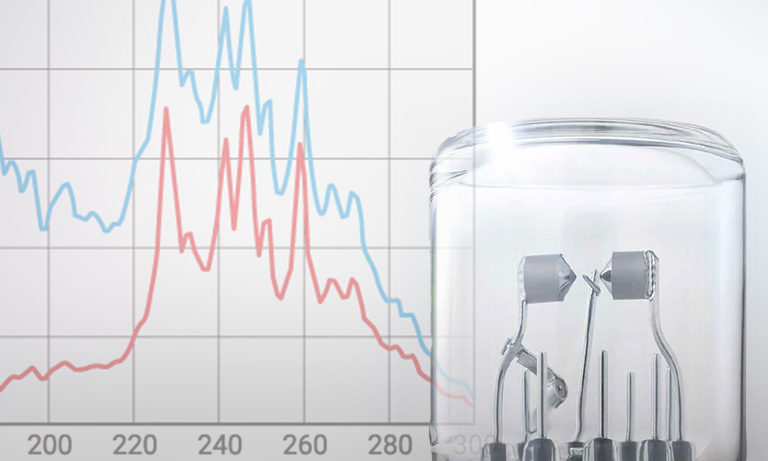
In UV-Vis analytical instrument design, the light source plays a critical role in shaping measurement performance, system complexity, and long-term reliability. Xenon (Xe) flash lamps are among the most versatile and high-performance light sources for analytical instruments that require broadband, intense, and stable illumination. Their combination of deep-UV spectral reach, high-intensity pulsed output, compact size, and long operational lifetime makes them particularly well suited for demanding measurements in water quality monitoring, ellipsometry, and broadband spectroscopy.
OEM light source challenges
For OEM teams, the light source is rarely a simple component choice. It directly impacts measurement performance, enclosure design, and lifetime cost, especially in UV‑Vis systems that need broadband coverage and dependable output. Common challenges include:
Signal quality limitations in UV and broadband systems
Limited deep‑UV output can reduce sensitivity for UV absorbance parameters and slow measurements. Low photon flux can lower SNR in highly absorbing, turbid, or low-reflectivity samples.
Stability and calibration complexity
Intensity fluctuation and drift can compromise repeatability unless you design in reference-channel correction or normalization.
Integration constraints (size, power, thermal)
Large housings and long beam paths can increase enclosure size and mechanical complexity. Higher power draw increases heat load, raising the risk of thermal drift and adding cooling and noise requirements.
Maintenance and system uptime challenges
Short lifetimes, such as the roughly 2,000 hours typical for halogen lamps, drive replacement cycles, downtime, and service cost. In remote or continuous-monitoring deployments, the impact on maintenance access and instrument uptime becomes even greater.
Applications where xenon flash lamps shine
Water quality monitoring (UV absorbance)
Water monitoring often relies on UV absorbance, where many contaminants and indicators exhibit strong absorption in the UV region. Xenon flash lamps are a strong fit because they provide deep‑UV output with high peak intensity, helping systems maintain sensitivity even when samples are dark or turbid. Key advantages in these systems include:
- Support UV absorbance parameters such as UV254 for organic matter monitoring.
- Improved measurement robustness in scattering media via pulsed high-intensity illumination.
- Low average power helps minimize thermal load and temperature-driven drift in flow cells and optics.
- Long lifetime and low maintenance support continuous, unattended monitoring in environmental and industrial installations.
Ellipsometry (thin-film metrology)
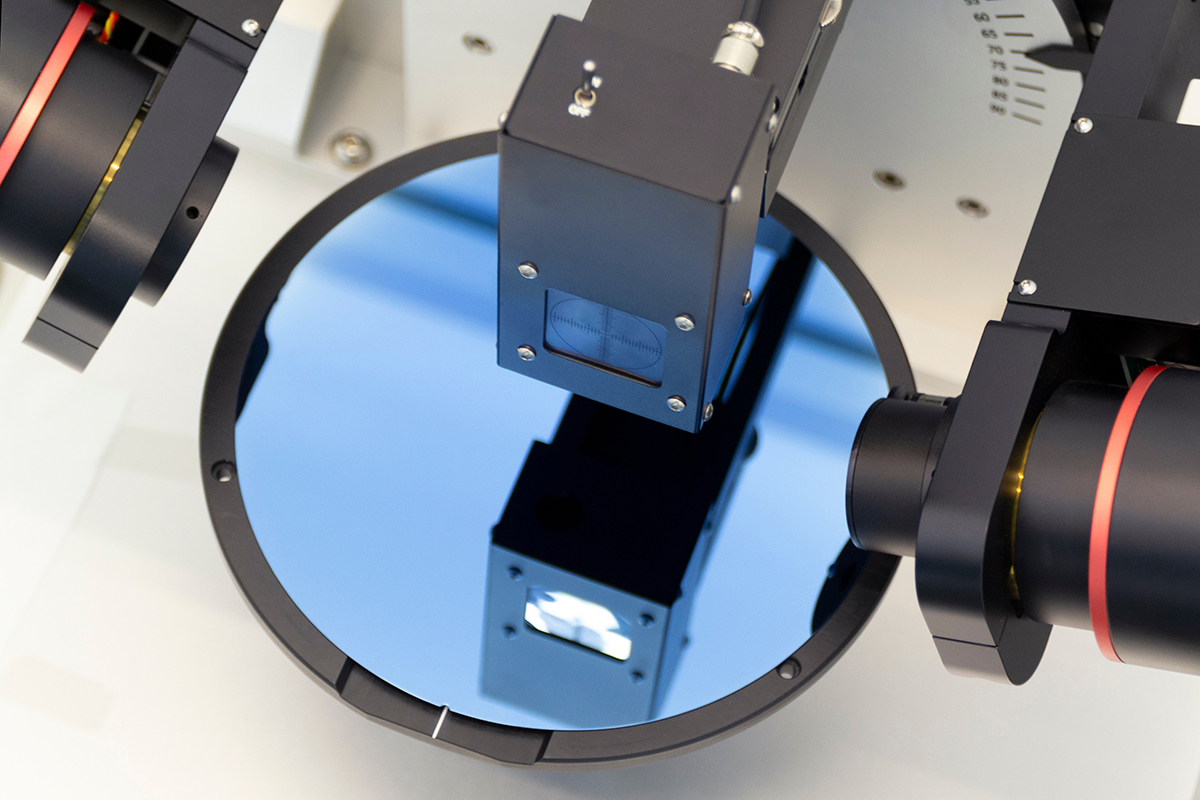
Spectroscopic ellipsometry depends on stable, broadband illumination to measure changes in polarization across wavelength and extract thin‑film thickness and optical constants. Xenon flash lamps provide a smooth spectrum across UV, visible, and NIR regions, helping expand measurement range without switching sources. In this context, xenon flash lamps can offer:
- Broad spectral coverage supports fitting models across wider wavelength bands for improved accuracy.
- High peak intensity can boost detection sensitivity for thin or weakly interacting layers.
- Pulse normalization techniques can support repeatability while keeping average power and heat low.
UV-Vis spectroscopy and extended range measurements
For broadband spectroscopy absorbance, reflectance, and related measurements, xenon flash illumination offers a practical way to achieve strong UV-Vis performance while also supporting extended wavelength architectures. The result is a flexible source that can simplify instrument design, improve dynamic range, and support faster acquisition. This can provide several practical benefits:
- Enables wide-range measurements from one source, reducing the need for multiple emitters.
- High pulse intensity supports faster scans and improved SNR in challenging samples.
- Compact modules support portable and space-constrained spectrometer designs.

Water quality monitoring (UV absorbance)
Ellipsometry (thin-film metrology)

UV-Vis spectroscopy and extended range measurements
How xenon flash lamps help solve these challenges
Xenon flash lamps are well suited to addressing the common OEM pain points above, and can offer clear benefits across these analytical applications. These include:
Broadband spectrum for multi-modal measurements
Xenon flash lamps deliver a smooth, continuous spectrum that can extend from deep-UV into the infrared, enabling one illumination platform to support multiple techniques. In practice, this means a single lamp can cover UV absorbance bands (e.g., for water analysis) while also supporting visible and NIR measurements in the same optical engine. This can reduce the need for multiple dedicated emitters and simplify optical design.
High-intensity pulsed light with low power requirements
By concentrating photons into short pulses, xenon flash sources can improve signal-to-noise ratio and enable faster measurements, especially when samples are absorbing, scattering, or low-reflectivity. Because the output is pulsed rather than continuous, the average electrical power can remain very low. This helps OEMs manage heat, reduce thermal drift, and design smaller, quieter instruments.
Stability and long operational lifetime
Reliable spectroscopy depends on repeatable illumination. Modern xenon flash modules can achieve strong intensity stability when paired with reference-channel correction or pulse-to-pulse normalization, reducing calibration headaches. Their long service life reduces replacement frequency compared with many conventional lamps. This helps improve uptime and lower field service costs, especially in continuously operating or remotely deployed systems.
Compact form factor for easy integration
OEM instrument layouts increasingly demand short beam paths, tight mechanical packaging, and efficient thermal management. Compact xenon flash modules support dense optical layouts without sacrificing spectral reach, helping teams reduce enclosure volume and keep integration straightforward in portable spectrometers, process monitors, and other space‑constrained analytical devices.
Xenon flash lamps selection guide
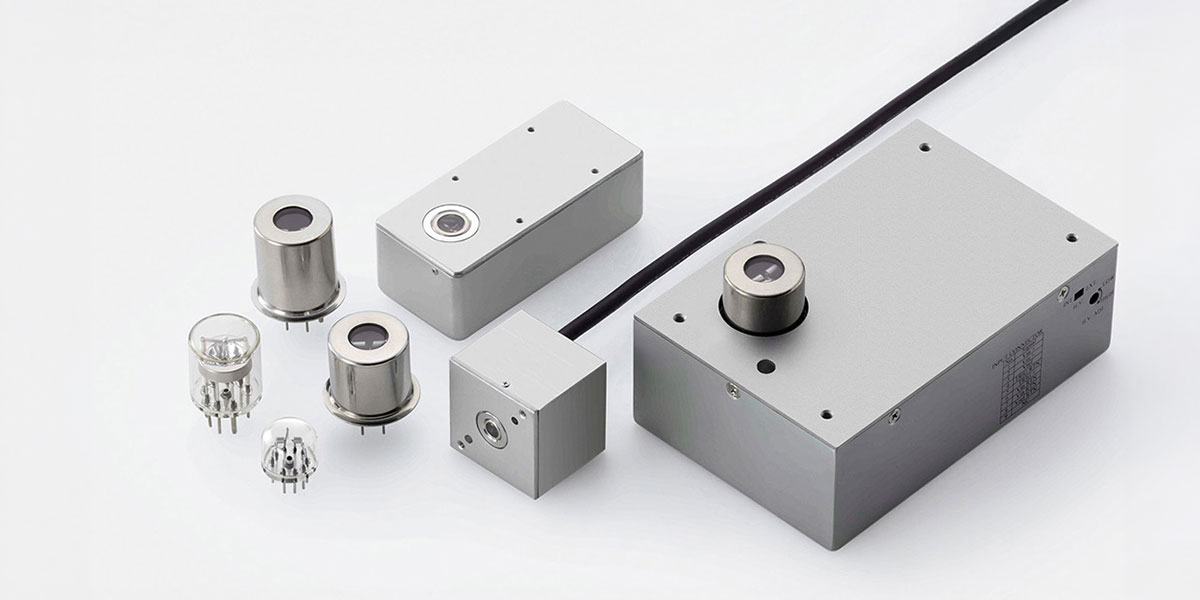
Below is a comparison to help you select the right light source module for your instrument design.
Selection guidance
Choose a xenon flash module when you need deep-UV reach, high peak intensity, or low average power. Choose halogen when continuous Vis–NIR illumination is sufficient and deep-UV output is not required.
| Product | Best for | Spectral coverage | Power / output mode |
Notes |
|---|---|---|---|---|
| E3-X 2 W Xenon Lamp | Broadband analytical instruments needing maximum range in a compact module | 160–7,500 nm |
<1 W average (pulsed) |
~3% stability; ~28,000 h at 10 Hz; integration-focused design |
XeF 2 W Module |
Established spectroscopy platforms requiring robust short-pulse intensity |
Wide broadband |
Pulsed
|
Long operational lifetime; proven performance in deployed systems |
E3-Xm Mini Xenon Light Source |
Space-constrained designs that still need xenon flash capability |
Broadband |
Pulsed (mid-level output) |
~30 mm cube form factor |
Halogen 20 W Lamp |
Applications prioritizing stable continuous Vis–NIR output (no deep-UV) |
Vis–NIR |
20 W (continuous)
|
Good when deep-UV is not required |
Xenon flash lamps combine deep‑UV to IR spectral reach, high peak pulse intensity, low average power, and long service life in a compact package. For OEM UV‑Vis systems used in water monitoring, ellipsometry, and broadband spectroscopy, this translates into stronger signals, simpler optical architectures, and reliable long-term operation.
Talk to our sales engineers to discuss integration options, reference-channel strategies, and the right xenon flash module for your UV-Vis instrument.
- Confirmation
-
It looks like you're in the . If this is not your location, please select the correct region or country below.
You're headed to Hamamatsu Photonics website for GB (English). If you want to view an other country's site, the optimized information will be provided by selecting options below.
In order to use this website comfortably, we use cookies. For cookie details please see our cookie policy.
- Cookie Policy
-
This website or its third-party tools use cookies, which are necessary to its functioning and required to achieve the purposes illustrated in this cookie policy. By closing the cookie warning banner, scrolling the page, clicking a link or continuing to browse otherwise, you agree to the use of cookies.
Hamamatsu uses cookies in order to enhance your experience on our website and ensure that our website functions.
You can visit this page at any time to learn more about cookies, get the most up to date information on how we use cookies and manage your cookie settings. We will not use cookies for any purpose other than the ones stated, but please note that we reserve the right to update our cookies.
1. What are cookies?
For modern websites to work according to visitor’s expectations, they need to collect certain basic information about visitors. To do this, a site will create small text files which are placed on visitor’s devices (computer or mobile) - these files are known as cookies when you access a website. Cookies are used in order to make websites function and work efficiently. Cookies are uniquely assigned to each visitor and can only be read by a web server in the domain that issued the cookie to the visitor. Cookies cannot be used to run programs or deliver viruses to a visitor’s device.
Cookies do various jobs which make the visitor’s experience of the internet much smoother and more interactive. For instance, cookies are used to remember the visitor’s preferences on sites they visit often, to remember language preference and to help navigate between pages more efficiently. Much, though not all, of the data collected is anonymous, though some of it is designed to detect browsing patterns and approximate geographical location to improve the visitor experience.
Certain type of cookies may require the data subject’s consent before storing them on the computer.
2. What are the different types of cookies?
This website uses two types of cookies:
- First party cookies. For our website, the first party cookies are controlled and maintained by Hamamatsu. No other parties have access to these cookies.
- Third party cookies. These cookies are implemented by organizations outside Hamamatsu. We do not have access to the data in these cookies, but we use these cookies to improve the overall website experience.
3. How do we use cookies?
This website uses cookies for following purposes:
- Certain cookies are necessary for our website to function. These are strictly necessary cookies and are required to enable website access, support navigation or provide relevant content. These cookies direct you to the correct region or country, and support security and ecommerce. Strictly necessary cookies also enforce your privacy preferences. Without these strictly necessary cookies, much of our website will not function.
- Analytics cookies are used to track website usage. This data enables us to improve our website usability, performance and website administration. In our analytics cookies, we do not store any personal identifying information.
- Functionality cookies. These are used to recognize you when you return to our website. This enables us to personalize our content for you, greet you by name and remember your preferences (for example, your choice of language or region).
- These cookies record your visit to our website, the pages you have visited and the links you have followed. We will use this information to make our website and the advertising displayed on it more relevant to your interests. We may also share this information with third parties for this purpose.
Cookies help us help you. Through the use of cookies, we learn what is important to our visitors and we develop and enhance website content and functionality to support your experience. Much of our website can be accessed if cookies are disabled, however certain website functions may not work. And, we believe your current and future visits will be enhanced if cookies are enabled.
4. Which cookies do we use?
There are two ways to manage cookie preferences.
- You can set your cookie preferences on your device or in your browser.
- You can set your cookie preferences at the website level.
If you don’t want to receive cookies, you can modify your browser so that it notifies you when cookies are sent to it or you can refuse cookies altogether. You can also delete cookies that have already been set.
If you wish to restrict or block web browser cookies which are set on your device then you can do this through your browser settings; the Help function within your browser should tell you how. Alternatively, you may wish to visit www.aboutcookies.org, which contains comprehensive information on how to do this on a wide variety of desktop browsers.
5. What are Internet tags and how do we use them with cookies?
Occasionally, we may use internet tags (also known as action tags, single-pixel GIFs, clear GIFs, invisible GIFs and 1-by-1 GIFs) at this site and may deploy these tags/cookies through a third-party advertising partner or a web analytical service partner which may be located and store the respective information (including your IP-address) in a foreign country. These tags/cookies are placed on both online advertisements that bring users to this site and on different pages of this site. We use this technology to measure the visitors' responses to our sites and the effectiveness of our advertising campaigns (including how many times a page is opened and which information is consulted) as well as to evaluate your use of this website. The third-party partner or the web analytical service partner may be able to collect data about visitors to our and other sites because of these internet tags/cookies, may compose reports regarding the website’s activity for us and may provide further services which are related to the use of the website and the internet. They may provide such information to other parties if there is a legal requirement that they do so, or if they hire the other parties to process information on their behalf.
If you would like more information about web tags and cookies associated with on-line advertising or to opt-out of third-party collection of this information, please visit the Network Advertising Initiative website http://www.networkadvertising.org.
6. Analytics and Advertisement Cookies
We use third-party cookies (such as Google Analytics) to track visitors on our website, to get reports about how visitors use the website and to inform, optimize and serve ads based on someone's past visits to our website.
You may opt-out of Google Analytics cookies by the websites provided by Google:
https://tools.google.com/dlpage/gaoptout?hl=en
As provided in this Privacy Policy (Article 5), you can learn more about opt-out cookies by the website provided by Network Advertising Initiative:
http://www.networkadvertising.org
We inform you that in such case you will not be able to wholly use all functions of our website.
Close