
Products










We are actively taking measures to improve product quality levels.
Applications












Why Hamamatsu?
Resources





Support



Our company





Investors







United Kingdom (EN)
Select your region or country.
Hamamatsu Photonics supports IceCube Upgrade, strengthening neutrino measurements in Antarctic ice
- Hamamatsu Photonics Europe
New optical instrumentation deployed in the South Pole is expanding IceCube Neutrino Observatory’s sensitivity for lower-energy neutrino measurements.
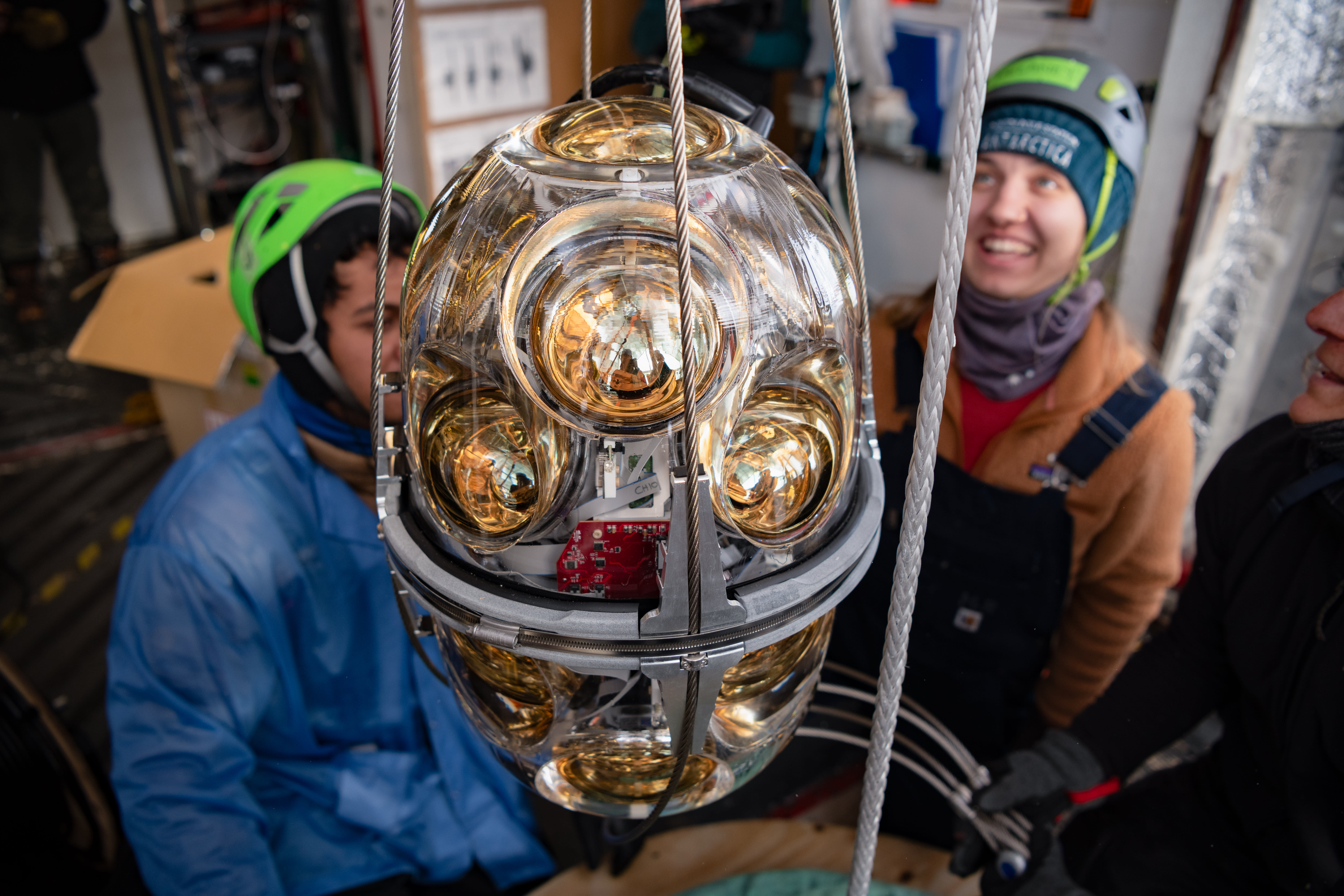
Hamamatsu Photonics marks the successful deployment of the IceCube Upgrade at the U.S. National Science Foundation’s Amundsen–Scott South Pole Station, delivered by the IceCube Collaboration. The newly installed sensor strings deployed deep into Antarctic ice enhance IceCube’s ability to record the faint Cherenkov light produced when neutrinos interact in the ice, supporting more precise measurements across an expanded energy range.
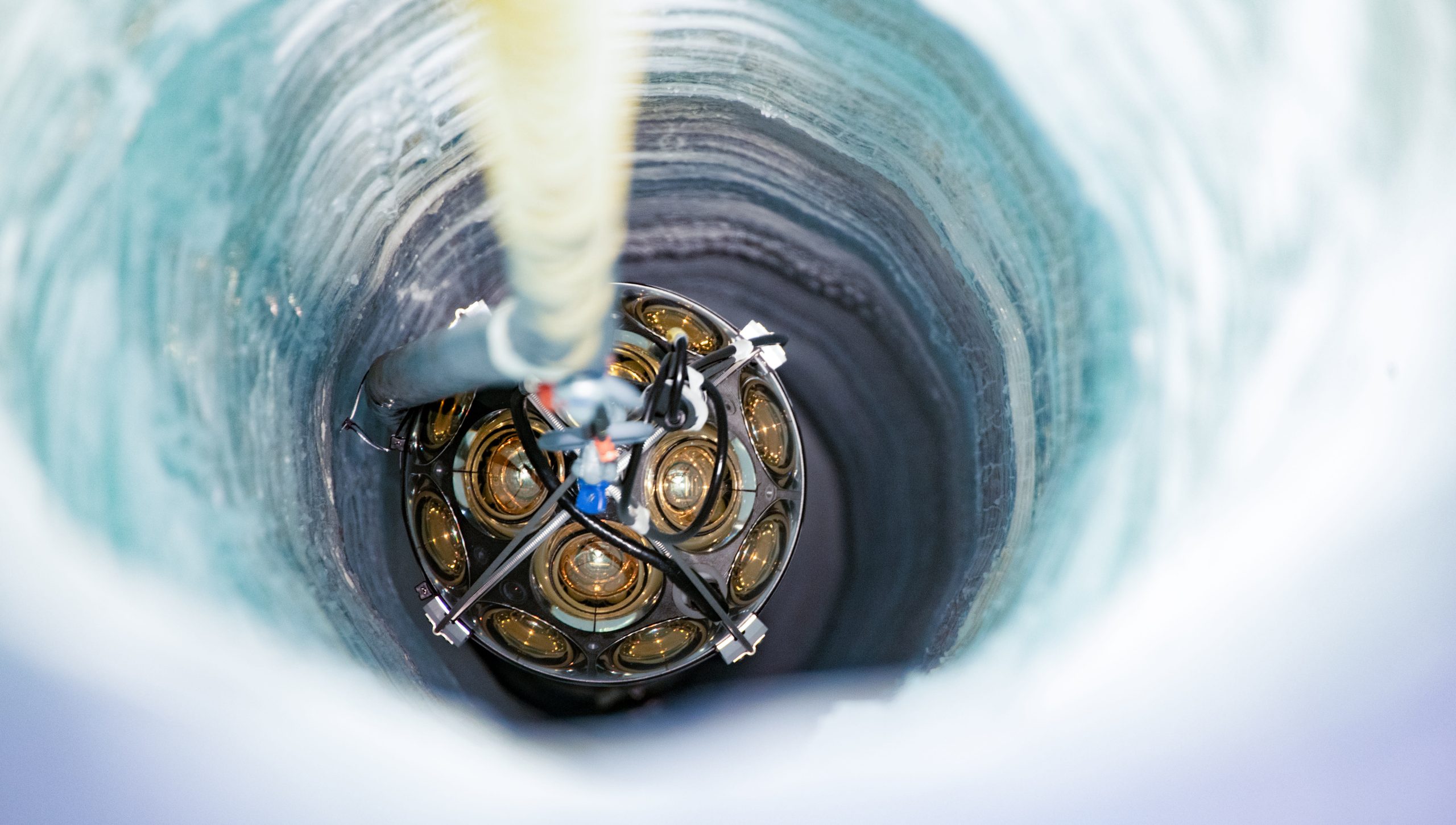
Photo: Credit: Yuya Makino, IceCube/NSF
Collaboration details
The IceCube Neutrino Observatory is a large-scale scientific facility embedded in approximately one cubic kilometer of exceptionally clear Antarctic ice. Its mission is to detect faint flashes of light produced by neutrino interactions, enabling researchers to investigate fundamental questions in astrophysics. Hamamatsu Photonics supports the project by providing photodetector technologies and expertise in qualification and integration for operation in the challenging Antarctic environment.
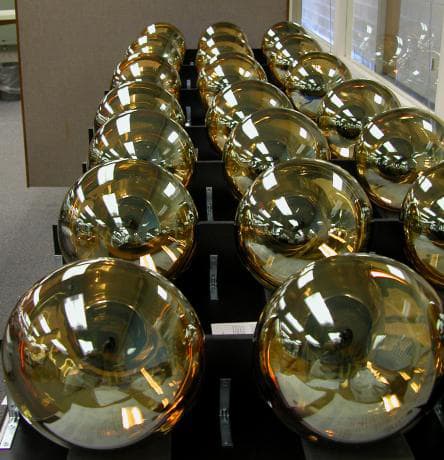
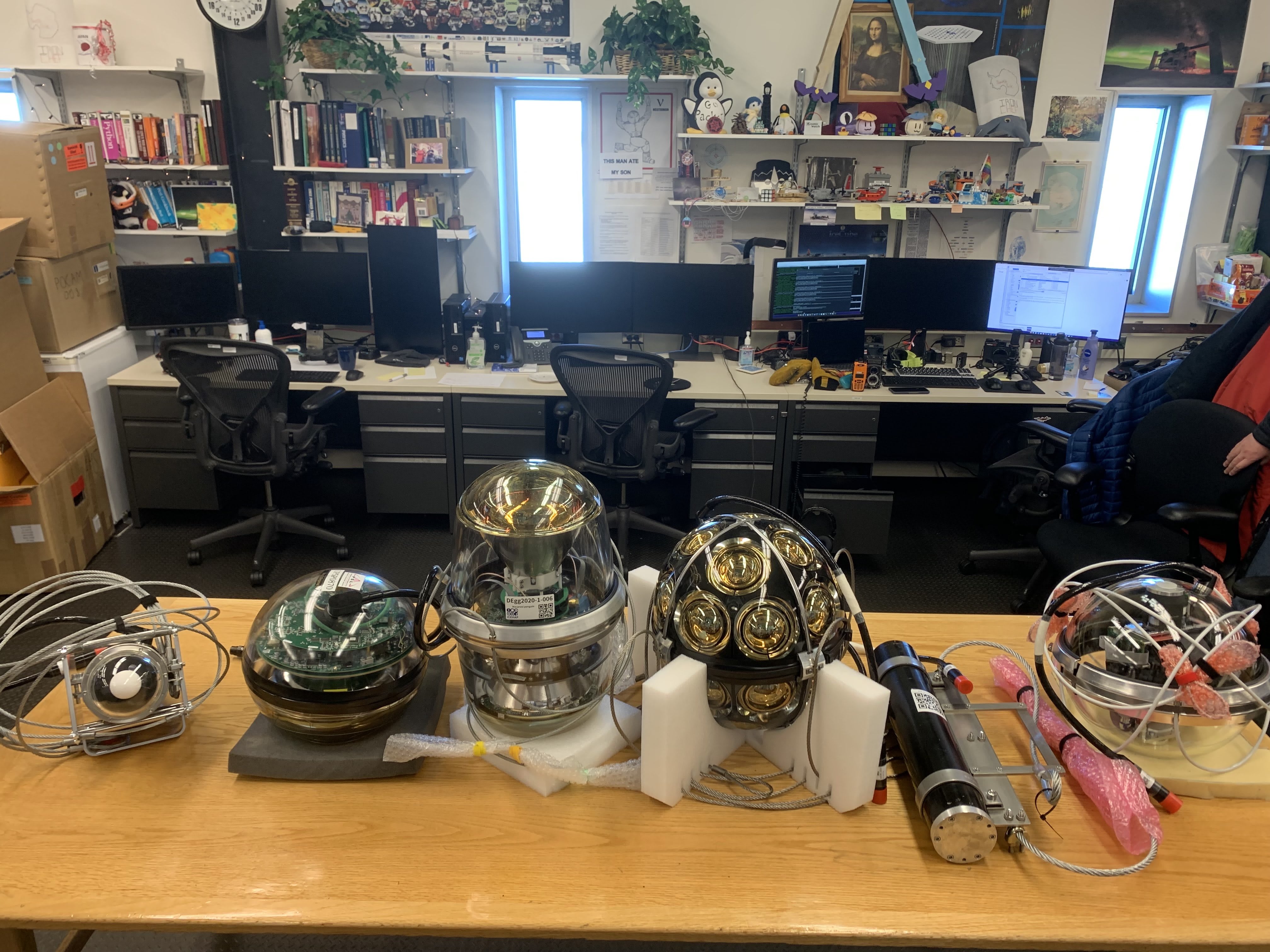
Hamamatsu works with the IceCube Collaboration on photodetector performance, qualification and integration for reliable operation in the Antarctic environment. For the Upgrade, IceCube is introducing new optical module designs that integrate multiple PMTs within a single pressure housing, increasing effective photocathode area and improving angular coverage of detected light. These design choices, combined with calibration improvements, are intended to strengthen event reconstruction and reduce sources of measurement uncertainties.
Project initiative details
The recent Upgrade involved the installation of five new instrumented strings, reaching depths of up to 2,400 meters and adding more than 650 new photodetectors and calibration devices. A key innovation is the use of multi-PMT optical modules, which increase the effective detection area and improve the directional coverage of light signals. These enhancements are expected to improve IceCube’s sensitivity to lower-energy neutrinos, support more precise studies of neutrino oscillations, and strengthen the observatory’s ability to detect astrophysical phenomena such as supernovae.
“IceCube is a remarkable collaboration that continues to expand how neutrinos can be measured and understood.” explains Dr. Florian Briechle, Sales Engineer – Academic, at Hamamatsu Photonics. “Our role is to work closely with the scientists and engineers to support their endeavors, providing customized photodetector technologies for specific project requirements, working alongside the team on qualification and integration.”
Working on IceCube’s scientific legacy
Since beginning full operations in 2010, IceCube has reported major results in neutrino astronomy, including evidence for high-energy astrophysical neutrinos and progress toward identifying potential neutrino sources. Notable achievements include the association of a high-energy neutrino with the blazar TXS 0506+056 and evidence for neutrino emission from the active galactic nucleus in Messier 77 (NGC 1068). These discoveries depend on the ability to detect and reconstruct faint, time-resolved light patterns across many sensors, a process that relies on high-performance photodetectors and careful calibration.
Hamamatsu’s contribution includes providing photodetector technologies used in IceCube’s optical modules and supporting qualification activities for reliable long-term operation. The company works closely with the collaboration to align detector characteristics and quality requirements with IceCube’s system-level needs. Looking ahead, the Upgrade also serves as a foundation for future expansions such as IceCube-Gen2.
For further details on the IceCube experiment visit The IceCube Neutrino Observatory gets a major upgrade beneath the ice – IceCube
About IceCube Neutrino Observatory
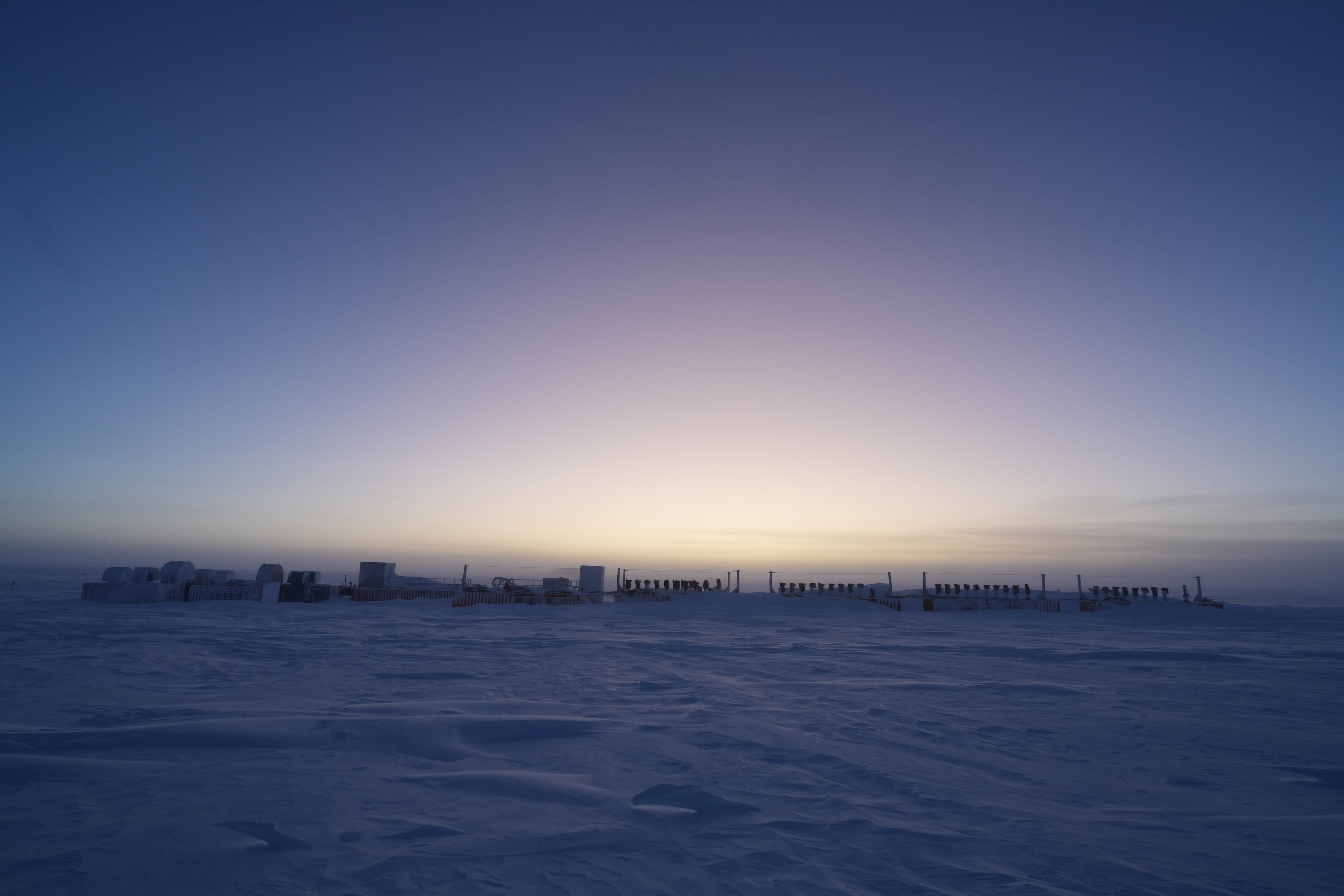
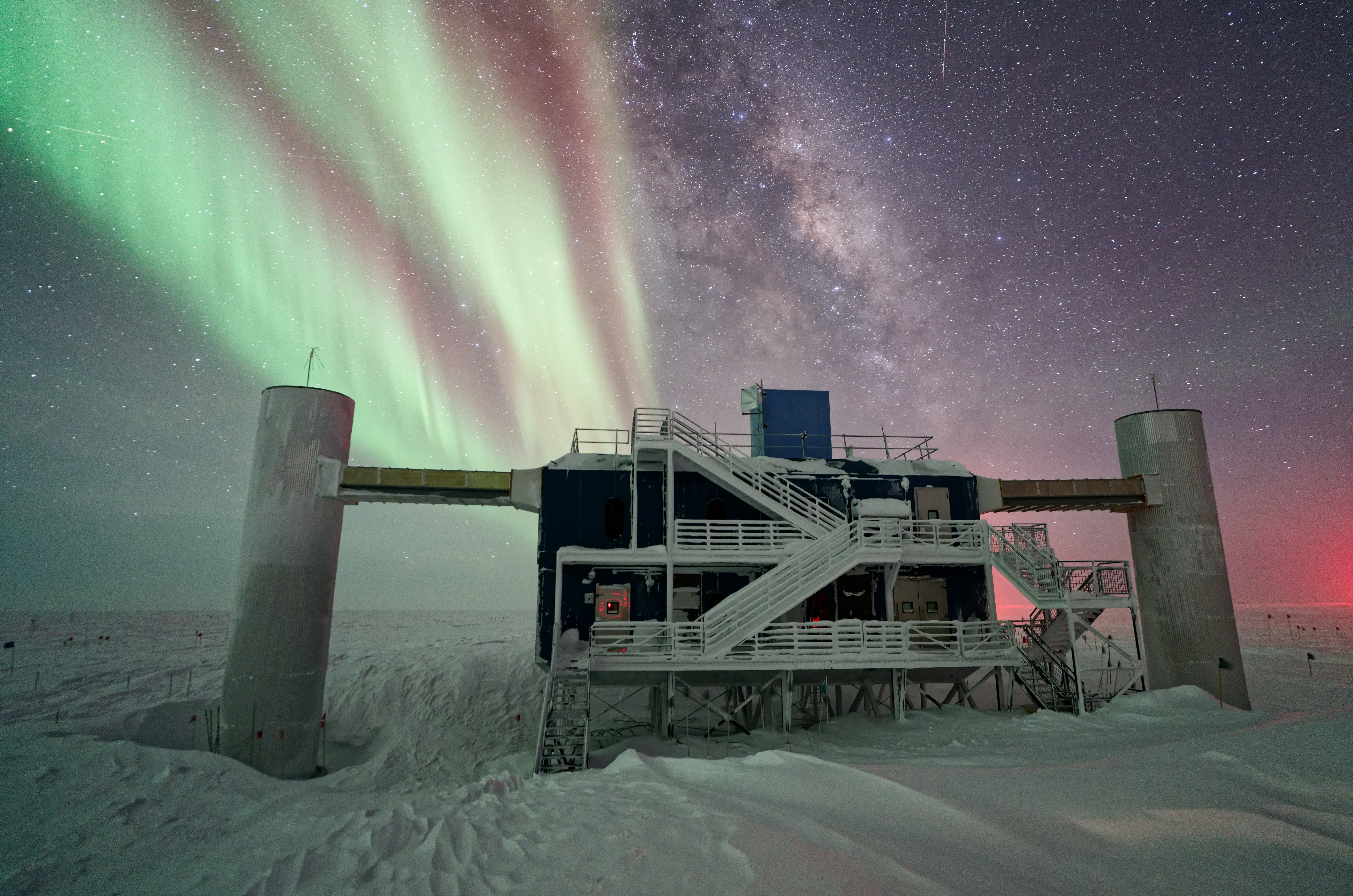
The IceCube Neutrino Observatory (IceCube) is a research facility at the South Pole in Antarctica. IceCube is maintained and operated by the Wisconsin IceCube Particle Astrophysics Center (WIPAC) with funding from the U.S. National Science Foundation (NSF) and other international funders. Scientific analysis is performed around the world by members of our international IceCube Collaboration. https://icecube.wisc.edu/
- Confirmation
-
It looks like you're in the . If this is not your location, please select the correct region or country below.
You're headed to Hamamatsu Photonics website for GB (English). If you want to view an other country's site, the optimized information will be provided by selecting options below.
In order to use this website comfortably, we use cookies. For cookie details please see our cookie policy.
- Cookie Policy
-
This website or its third-party tools use cookies, which are necessary to its functioning and required to achieve the purposes illustrated in this cookie policy. By closing the cookie warning banner, scrolling the page, clicking a link or continuing to browse otherwise, you agree to the use of cookies.
Hamamatsu uses cookies in order to enhance your experience on our website and ensure that our website functions.
You can visit this page at any time to learn more about cookies, get the most up to date information on how we use cookies and manage your cookie settings. We will not use cookies for any purpose other than the ones stated, but please note that we reserve the right to update our cookies.
1. What are cookies?
For modern websites to work according to visitor’s expectations, they need to collect certain basic information about visitors. To do this, a site will create small text files which are placed on visitor’s devices (computer or mobile) - these files are known as cookies when you access a website. Cookies are used in order to make websites function and work efficiently. Cookies are uniquely assigned to each visitor and can only be read by a web server in the domain that issued the cookie to the visitor. Cookies cannot be used to run programs or deliver viruses to a visitor’s device.
Cookies do various jobs which make the visitor’s experience of the internet much smoother and more interactive. For instance, cookies are used to remember the visitor’s preferences on sites they visit often, to remember language preference and to help navigate between pages more efficiently. Much, though not all, of the data collected is anonymous, though some of it is designed to detect browsing patterns and approximate geographical location to improve the visitor experience.
Certain type of cookies may require the data subject’s consent before storing them on the computer.
2. What are the different types of cookies?
This website uses two types of cookies:
- First party cookies. For our website, the first party cookies are controlled and maintained by Hamamatsu. No other parties have access to these cookies.
- Third party cookies. These cookies are implemented by organizations outside Hamamatsu. We do not have access to the data in these cookies, but we use these cookies to improve the overall website experience.
3. How do we use cookies?
This website uses cookies for following purposes:
- Certain cookies are necessary for our website to function. These are strictly necessary cookies and are required to enable website access, support navigation or provide relevant content. These cookies direct you to the correct region or country, and support security and ecommerce. Strictly necessary cookies also enforce your privacy preferences. Without these strictly necessary cookies, much of our website will not function.
- Analytics cookies are used to track website usage. This data enables us to improve our website usability, performance and website administration. In our analytics cookies, we do not store any personal identifying information.
- Functionality cookies. These are used to recognize you when you return to our website. This enables us to personalize our content for you, greet you by name and remember your preferences (for example, your choice of language or region).
- These cookies record your visit to our website, the pages you have visited and the links you have followed. We will use this information to make our website and the advertising displayed on it more relevant to your interests. We may also share this information with third parties for this purpose.
Cookies help us help you. Through the use of cookies, we learn what is important to our visitors and we develop and enhance website content and functionality to support your experience. Much of our website can be accessed if cookies are disabled, however certain website functions may not work. And, we believe your current and future visits will be enhanced if cookies are enabled.
4. Which cookies do we use?
There are two ways to manage cookie preferences.
- You can set your cookie preferences on your device or in your browser.
- You can set your cookie preferences at the website level.
If you don’t want to receive cookies, you can modify your browser so that it notifies you when cookies are sent to it or you can refuse cookies altogether. You can also delete cookies that have already been set.
If you wish to restrict or block web browser cookies which are set on your device then you can do this through your browser settings; the Help function within your browser should tell you how. Alternatively, you may wish to visit www.aboutcookies.org, which contains comprehensive information on how to do this on a wide variety of desktop browsers.
5. What are Internet tags and how do we use them with cookies?
Occasionally, we may use internet tags (also known as action tags, single-pixel GIFs, clear GIFs, invisible GIFs and 1-by-1 GIFs) at this site and may deploy these tags/cookies through a third-party advertising partner or a web analytical service partner which may be located and store the respective information (including your IP-address) in a foreign country. These tags/cookies are placed on both online advertisements that bring users to this site and on different pages of this site. We use this technology to measure the visitors' responses to our sites and the effectiveness of our advertising campaigns (including how many times a page is opened and which information is consulted) as well as to evaluate your use of this website. The third-party partner or the web analytical service partner may be able to collect data about visitors to our and other sites because of these internet tags/cookies, may compose reports regarding the website’s activity for us and may provide further services which are related to the use of the website and the internet. They may provide such information to other parties if there is a legal requirement that they do so, or if they hire the other parties to process information on their behalf.
If you would like more information about web tags and cookies associated with on-line advertising or to opt-out of third-party collection of this information, please visit the Network Advertising Initiative website http://www.networkadvertising.org.
6. Analytics and Advertisement Cookies
We use third-party cookies (such as Google Analytics) to track visitors on our website, to get reports about how visitors use the website and to inform, optimize and serve ads based on someone's past visits to our website.
You may opt-out of Google Analytics cookies by the websites provided by Google:
https://tools.google.com/dlpage/gaoptout?hl=en
As provided in this Privacy Policy (Article 5), you can learn more about opt-out cookies by the website provided by Network Advertising Initiative:
http://www.networkadvertising.org
We inform you that in such case you will not be able to wholly use all functions of our website.
Close